

Why Does IVF Fail Repeatedly? Understanding Implantation Issues
When IVF does not result in pregnancy, it can be emotionally difficult and confusing. Repeated IVF failure does not always mean that pregnancy is impossible. Several factors can influence IVF outcomes, including embryo quality, uterine health, hormonal balance, sperm health, and the timing of embryo transfer. Understanding the possible cause can help doctors develop a more suitable treatment plan.
Repeated IVF failure may sometimes be linked to problems with embryo implantation. Even when an embryo appears healthy, successful pregnancy requires the embryo to attach properly to a receptive uterine lining. A detailed fertility evaluation can help identify factors that may be affecting implantation and guide the next IVF treatment.
What Is Repeated IVF Failure?
Repeated IVF failure refers to situations where pregnancy has not occurred after multiple IVF attempts despite appropriate treatment. The reasons can vary from one person to another.
Some common factors include:
- Embryo chromosomal abnormalities
- Reduced embryo quality
- Problems with the uterine cavity
- Thin or abnormal endometrium
- Hormonal imbalances
- Uterine fibroids or polyps
- Endometriosis or adenomyosis
- Sperm-related factors
- Certain medical conditions
- Age-related changes in fertility
A fertility specialist may recommend additional investigations before starting another IVF cycle.
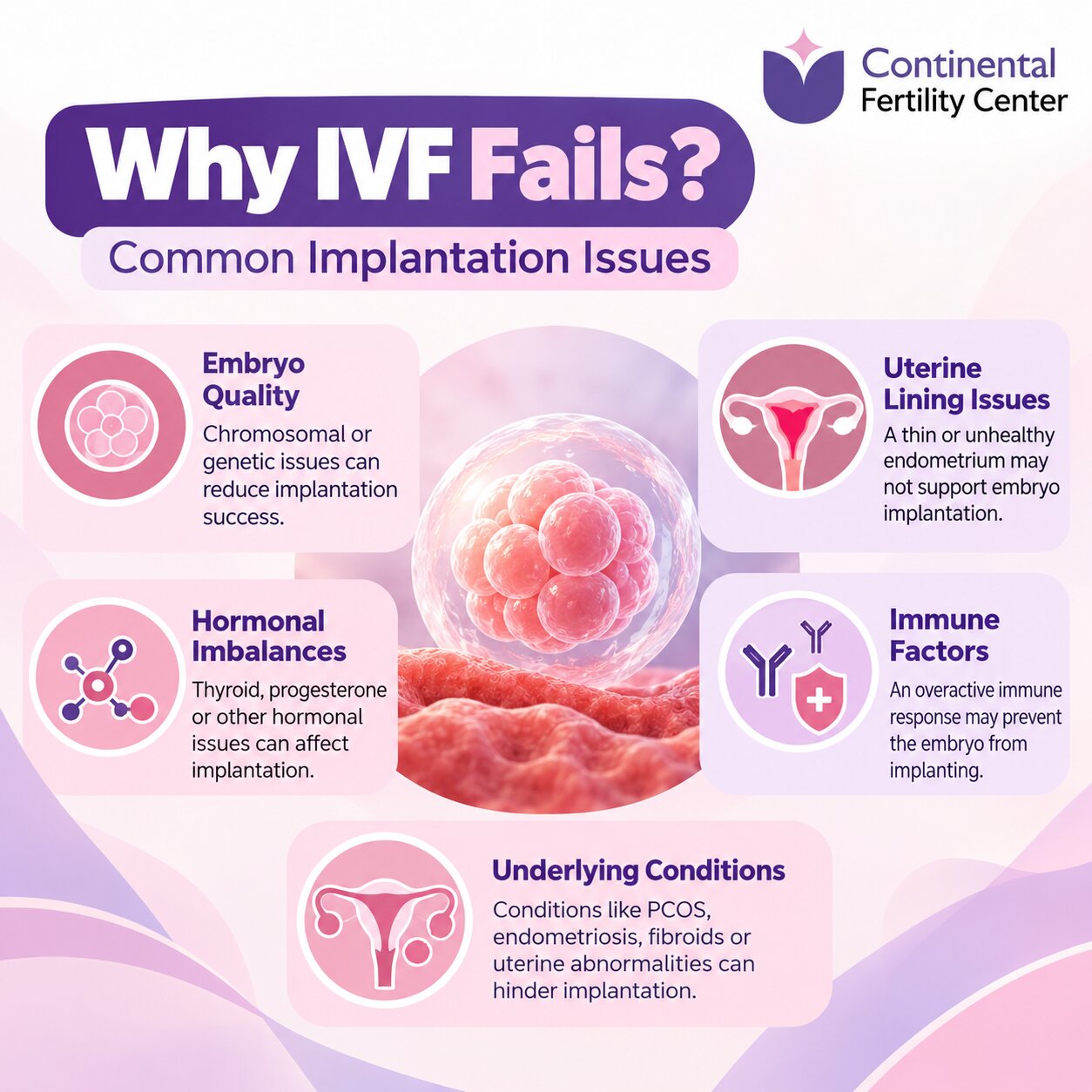
Why Can Embryo Implantation Fail?
One important cause of IVF failure is difficulty with embryo implantation. Implantation occurs when the embryo attaches to the lining of the uterus and begins the process of establishing a pregnancy.
For successful implantation, the embryo and uterus need to be ready at the right time. Problems involving embryo development, uterine receptivity, or endometrial health can affect this process.
Can Embryo Quality Cause Recurrent IVF Failure?
Yes. Embryo quality can influence IVF success. Some embryos may have chromosomal abnormalities that cannot be identified simply by looking at their appearance under a microscope.
Embryo development can be influenced by:
- Egg quality
- Sperm quality
- Age
- Genetic factors
- Laboratory conditions
- Embryo development
In selected cases, doctors may discuss additional genetic testing or other investigations based on the patient's individual circumstances.
Can Uterine Problems Cause IVF Implantation Failure?
The uterus plays an important role in pregnancy. Conditions affecting the uterine cavity or endometrium can sometimes interfere with implantation.
Possible concerns include:
- Uterine fibroids
- Endometrial polyps
- Scar tissue inside the uterus
- Adenomyosis
- Endometriosis
- Abnormal uterine anatomy
- Inadequate endometrial development
A fertility specialist may recommend ultrasound, hysteroscopy, or other appropriate investigations to evaluate the uterus.
Does Endometrial Health Affect IVF Success?
Yes. The endometrium is the inner lining of the uterus where the embryo implants. Endometrial health and uterine receptivity are important considerations during IVF treatment.
Doctors may evaluate the thickness and appearance of the endometrium and review the hormonal preparation used before embryo transfer. However, endometrial thickness is only one part of the overall implantation process.
What Tests May Be Recommended After Recurrent IVF Failure?
There is no single test that can identify the cause of every IVF failure. The recommended evaluation depends on individual medical history and previous IVF outcomes.
Your fertility specialist may consider:
- Detailed review of previous IVF cycles
- Ovarian reserve assessment
- Semen analysis
- Uterine and pelvic imaging
- Assessment of the uterine cavity
- Hormonal evaluation when indicated
- Review of embryo development
- Genetic evaluation in selected cases
Not every patient requires every test. Unnecessary investigations should be avoided.
Can Repeated IVF Failure Be Treated?
Treatment depends on the underlying cause. If a specific problem is identified, addressing it before another embryo transfer may improve the conditions for treatment.
Depending on the findings, the fertility specialist may recommend:
- Treating uterine abnormalities
- Optimizing hormonal preparation
- Reviewing embryo selection
- Managing underlying reproductive conditions
- Adjusting the IVF protocol
- Reviewing sperm- and egg-related factors
- Considering additional investigations when clinically appropriate
The goal is to understand why previous treatment did not work rather than simply repeating the same approach.
Why Choose Continental Fertility Center?
Choosing an experienced fertility center is important when dealing with recurrent IVF failure. Continental Fertility Center provides comprehensive fertility evaluation and individualized treatment planning under the guidance of fertility and reproductive medicine specialists.
Continental Hospitals follows established standards of healthcare quality and patient safety and is accredited by JCI and NABH. These accreditations reflect structured clinical processes and a commitment to quality healthcare.
Patients can benefit from:
- Individualized fertility assessment
- Experienced fertility specialists
- Advanced diagnostic facilities
- Embryology and reproductive medicine support
- Personalized IVF treatment planning
- Multidisciplinary medical expertise
- Structured monitoring and follow-up
When Should You Consult a Fertility Specialist?
If you have experienced repeated IVF failure, recurrent embryo transfer failure, or difficulty achieving pregnancy despite IVF treatment, consult a fertility specialist. A detailed evaluation can help identify possible factors affecting embryo implantation and determine the next appropriate step.
If you are experiencing repeated IVF failure or concerns related to embryo implantation, consult our best fertility specialist in Hyderabad at Continental Fertility Center for an individualized evaluation and treatment plan.
Conclusion
Repeated IVF failure can happen for several reasons, and it does not necessarily mean that future IVF treatment will be unsuccessful. Embryo quality, uterine health, endometrial receptivity, hormonal factors, sperm health, and other reproductive factors can all influence IVF outcomes.
Instead of assuming that another IVF cycle will have the same result, a detailed review of previous treatment and appropriate evaluation can help identify potential problems. With specialist guidance and an individualized approach, the next treatment plan can be better suited to your fertility needs.
For patients seeking advanced fertility care, Continental Fertility Center, part of Continental Hospitals, the best hospital in Hyderabad, provides comprehensive evaluation and personalized fertility treatment under experienced specialists.
Related Blogs:
Frequently Asked Questions
Repeated IVF failure can happen for several different reasons. Embryo quality is one important factor that can affect implantation. Chromosomal abnormalities in embryos may also reduce the chance of pregnancy. The condition of the uterus and endometrial lining can influence implantation. Hormonal problems may sometimes affect the reproductive environment. Problems such as fibroids or polyps may also need evaluation. Ovarian reserve and egg quality can affect IVF outcomes. Sperm quality can also contribute to embryo development problems. Age is another important factor affecting fertility and IVF success. Some medical conditions may affect implantation or early pregnancy. In some cases, no single cause can be identified. A fertility specialist can review previous IVF cycles and recommend further evaluation.
Implantation failure occurs when an embryo does not successfully attach to the uterine lining. Implantation is an important step after embryo transfer during IVF. A healthy embryo and suitable uterine environment both support successful implantation. Embryo chromosomal abnormalities can sometimes prevent normal development. The thickness and condition of the endometrium may also be important. Uterine polyps, fibroids, or adhesions can sometimes affect implantation. Hormonal changes may influence the preparation of the uterine lining. Certain infections or inflammatory conditions may also require evaluation. Repeated implantation failure does not always have one clear explanation. Doctors may review previous embryo transfers and treatment outcomes. Additional testing may be recommended based on individual circumstances. A personalized evaluation can help identify potentially treatable factors.
Embryo quality can play an important role in IVF treatment outcomes. An embryo needs appropriate development to implant and continue growing. Chromosomal abnormalities can occur in embryos during their development. These abnormalities may reduce the likelihood of implantation or ongoing pregnancy. Egg quality is closely related to embryo development. Age can influence the likelihood of chromosomal abnormalities in embryos. Sperm quality can also affect embryo development in some cases. Embryo grading provides information about the embryo's appearance and development. However, embryo grading does not guarantee that an embryo is chromosomally normal. Doctors may consider the number and quality of embryos available. Previous IVF outcomes can help guide future treatment planning. A fertility specialist can explain whether embryo-related factors may have contributed to repeated failure.
The endometrial lining plays an important role in embryo implantation. A thin endometrium may be associated with lower implantation chances in some IVF cycles. Several factors can contribute to a thin uterine lining. Previous procedures involving the uterus may sometimes affect the endometrium. Hormonal factors can also influence the development of the uterine lining. Blood flow to the uterus may be considered during certain evaluations. Doctors may monitor endometrial thickness during an IVF cycle. The appearance and overall condition of the lining may also be assessed. A thin lining does not automatically mean that IVF will fail. Treatment depends on the underlying reason for the thin lining. Your fertility specialist may recommend additional evaluation or treatment. The approach should be individualized according to your fertility history.
Some fibroids can affect fertility and IVF outcomes. The effect depends on their size and location in the uterus. Fibroids that distort the uterine cavity may interfere with implantation. They may also affect the shape of the endometrial cavity. Not every fibroid requires treatment before IVF. Small fibroids that do not affect the uterine cavity may have less impact. Your doctor may use ultrasound or other imaging to assess fibroids. The fertility team may review their location before planning treatment. Treatment decisions depend on individual fertility and reproductive factors. Removing a fibroid is not automatically recommended for every patient. Other causes of repeated IVF failure should also be considered. A fertility specialist can determine whether fibroids may be contributing to implantation problems.
Hormonal factors can sometimes influence the success of an IVF cycle. Hormones help prepare the ovaries and uterus during fertility treatment. Thyroid problems may affect fertility and pregnancy in some patients. Other hormonal conditions can also affect reproductive function. The endometrium needs appropriate hormonal support for implantation. Doctors may check hormone levels when clinically indicated. Treatment protocols can be adjusted based on individual response. Hormonal support may be provided after embryo transfer when appropriate. However, repeated IVF failure is not always caused by hormones. Embryo quality and uterine factors may also play important roles. A fertility specialist may review hormone results alongside previous IVF outcomes. Treatment should address an identified hormonal problem rather than relying on unnecessary supplements or medications.
The tests recommended after IVF failure depend on the patient's individual history. Your fertility specialist may first review previous IVF cycles in detail. This may include ovarian response, embryo development, and transfer details. Ultrasound may be used to evaluate the uterus and ovaries. Additional imaging may be recommended when a uterine problem is suspected. Hormonal testing may be considered when clinically appropriate. Ovarian reserve may also be assessed in selected patients. Sperm evaluation can be repeated if male factors are suspected. Certain tests for uterine conditions may be recommended based on symptoms or history. Genetic evaluation may be discussed in specific situations. Not every patient needs every available fertility test. Testing should focus on finding factors that could change future treatment decisions. A personalized evaluation can help guide the next IVF cycle.
IVF can still result in pregnancy after previous unsuccessful cycles. Repeated failure does not mean that future treatment cannot work. The chances depend on several factors affecting individual fertility. Age and ovarian reserve can influence treatment outcomes. Embryo quality is another important factor in IVF success. Uterine health and implantation conditions may also need assessment. Previous IVF cycles can provide useful information for planning future treatment. Doctors may modify the stimulation or embryo transfer approach when appropriate. Treatable uterine or hormonal problems may be addressed before another cycle. In some cases, additional fertility evaluation may be recommended. There is no single treatment that guarantees IVF success. A fertility specialist can review the reasons for previous failures. A personalized treatment plan can help improve the chances of a successful future cycle.