
Fertility Tips During Seasonal Changes
Fertility is influenced by many factors, including age, lifestyle, nutrition, hormones, stress, and overall health. However, many people are surprised to learn that changing seasons can also affect reproductive health. Temperature, sunlight, humidity, seasonal illnesses, and lifestyle changes throughout the year can influence hormone balance, energy levels, sleep quality, and fertility.
Understanding the connection between fertility during seasonal changes and reproductive health can help couples make healthier choices while planning for pregnancy. Following the right fertility tips throughout the year supports your body and creates a healthier environment for conception. Whether you are trying to conceive naturally or planning fertility treatment, seasonal care plays an important role in improving fertility health.
What Are Seasonal Changes in Fertility?
Seasonal fertility refers to the natural changes in reproductive health that occur during different seasons. These changes may affect both men and women. Hormone production, vitamin levels, body temperature, immunity, and lifestyle habits often change with the weather.
Although seasons alone do not determine fertility, they may influence factors that support healthy conception. Following the right fertility tips during every season helps maintain hormonal balance and supports reproductive health throughout the year.
Why Do Seasonal Changes Affect Fertility?
Several environmental and lifestyle factors contribute to fertility during seasonal changes.
Some of the common reasons include:
- Changes in sunlight exposure that affect Vitamin D levels
- Seasonal differences in physical activity
- Dietary changes throughout the year
- Variations in sleep patterns
- Stress related to weather and work schedules
- Increased risk of seasonal infections
- Changes in hydration levels
- Extreme temperatures affecting reproductive health
By understanding these changes, couples can follow effective fertility tips to protect their fertility health.
Fertility Tips for Summer
Hot weather can place extra stress on the body. Dehydration and excessive heat may affect sperm quality and overall reproductive health.
Here are some important fertility tips for summer:
- Drink plenty of water throughout the day.
- Eat fresh fruits rich in antioxidants.
- Include seasonal vegetables in your meals.
- Avoid prolonged exposure to extreme heat.
- Wear loose and comfortable clothing.
- Exercise during cooler hours.
- Maintain a healthy sleep schedule.
- Reduce sugary drinks and processed foods.
Men should avoid excessive heat around the testicles because high temperatures may temporarily reduce sperm production.
Following these fertility tips helps support seasonal fertility during the hottest months.
Fertility Tips for Monsoon
The rainy season brings welcome relief from heat but also increases the risk of infections and digestive illnesses.
Helpful fertility tips during monsoon include:
- Eat freshly prepared food.
- Drink clean and safe water.
- Wash fruits and vegetables thoroughly.
- Maintain good personal hygiene.
- Avoid outside food if hygiene is uncertain.
- Stay physically active indoors.
- Strengthen immunity with healthy foods.
- Get enough sleep every night.
Preventing seasonal infections supports better fertility health and prepares the body for pregnancy.
Fertility Tips for Winter
Winter often encourages people to stay indoors and become less active. Shorter daylight hours may also reduce vitamin D production.
Important fertility tips for winter include:
- Spend time in morning sunlight whenever possible.
- Include vitamin D-rich foods in your diet.
- Continue regular exercise.
- Eat healthy homemade meals.
- Stay hydrated even if you do not feel thirsty.
- Manage stress through relaxation techniques.
- Keep warm without overheating.
Good nutrition and regular movement are essential for maintaining reproductive health during winter.
How Does Nutrition Support Fertility During Seasonal Changes?
Healthy nutrition remains one of the most important fertility tips regardless of the season. Every meal provides nutrients that support hormone production, egg quality, sperm health, and overall fertility care.
Foods that support fertility health include:
- Green leafy vegetables
- Fresh seasonal fruits
- Whole grains
- Eggs
- Dairy products
- Fish rich in omega-3 fatty acids
- Nuts and seeds
- Beans and lentils
Limiting processed foods, excess sugar, and unhealthy fats also supports better reproductive health.
Can Seasonal Stress Affect Fertility?
Yes. Emotional and physical stress can influence hormone levels that regulate ovulation and sperm production.
Simple fertility tips for stress management include:
- Practice deep breathing exercises.
- Get seven to eight hours of sleep.
- Spend time outdoors when weather permits.
- Maintain regular physical activity.
- Talk openly with your partner.
- Seek medical advice when stress becomes overwhelming.
Managing stress improves fertility health and supports successful conception.
How Important Is Exercise for Seasonal Fertility?
Exercise plays an important role in fertility during seasonal changes. Moderate physical activity helps maintain a healthy weight, improves blood circulation, reduces stress, and supports hormone balance.
Recommended activities include:
- Walking
- Yoga
- Swimming
- Cycling
- Light strength training
- Stretching exercises
Avoid excessive exercise because overtraining may interfere with normal reproductive hormones.
How Does Sleep Affect Fertility Health?
Quality sleep allows the body to regulate important reproductive hormones.
Good sleep habits include:
- Sleeping at the same time every night
- Limiting screen time before bed
- Keeping the bedroom comfortable
- Avoiding caffeine late in the evening
- Following a relaxing bedtime routine
One of the easiest fertility tips is to make healthy sleep a daily priority.
When Should You Visit a Fertility Specialist?
While healthy lifestyle habits improve fertility health, some couples may need medical evaluation.
You should consult a fertility specialist if:
- You have been trying to conceive for one year without success.
- Women over 35 have been trying for six months.
- Men have known fertility concerns.
- Menstrual cycles are irregular.
- There is a history of miscarriage.
- Either partner has hormonal disorders.
- There are known reproductive health conditions.
Early diagnosis helps identify problems and provides timely fertility care.
Why Choose Continental Fertility Center?
Continental Fertility Center is one of the trusted destinations for advanced fertility care in Hyderabad. Our experienced fertility specialists provide comprehensive evaluation, personalized treatment plans, and compassionate support for every couple.
The fertility center is part of Continental Hospitals, a leading healthcare institution known for clinical excellence, advanced medical technology, and patient-centered care. Continental Hospitals is accredited by JCI, NABH, and QAI, reflecting its commitment to international standards of quality, safety, and excellence. Patients benefit from modern fertility laboratories, advanced diagnostic services, experienced embryologists, and multidisciplinary medical expertise under one roof.
Whether you are planning your first pregnancy or seeking advanced fertility treatment, our dedicated team is committed to supporting your reproductive health journey with the highest standards of care.
Conclusion
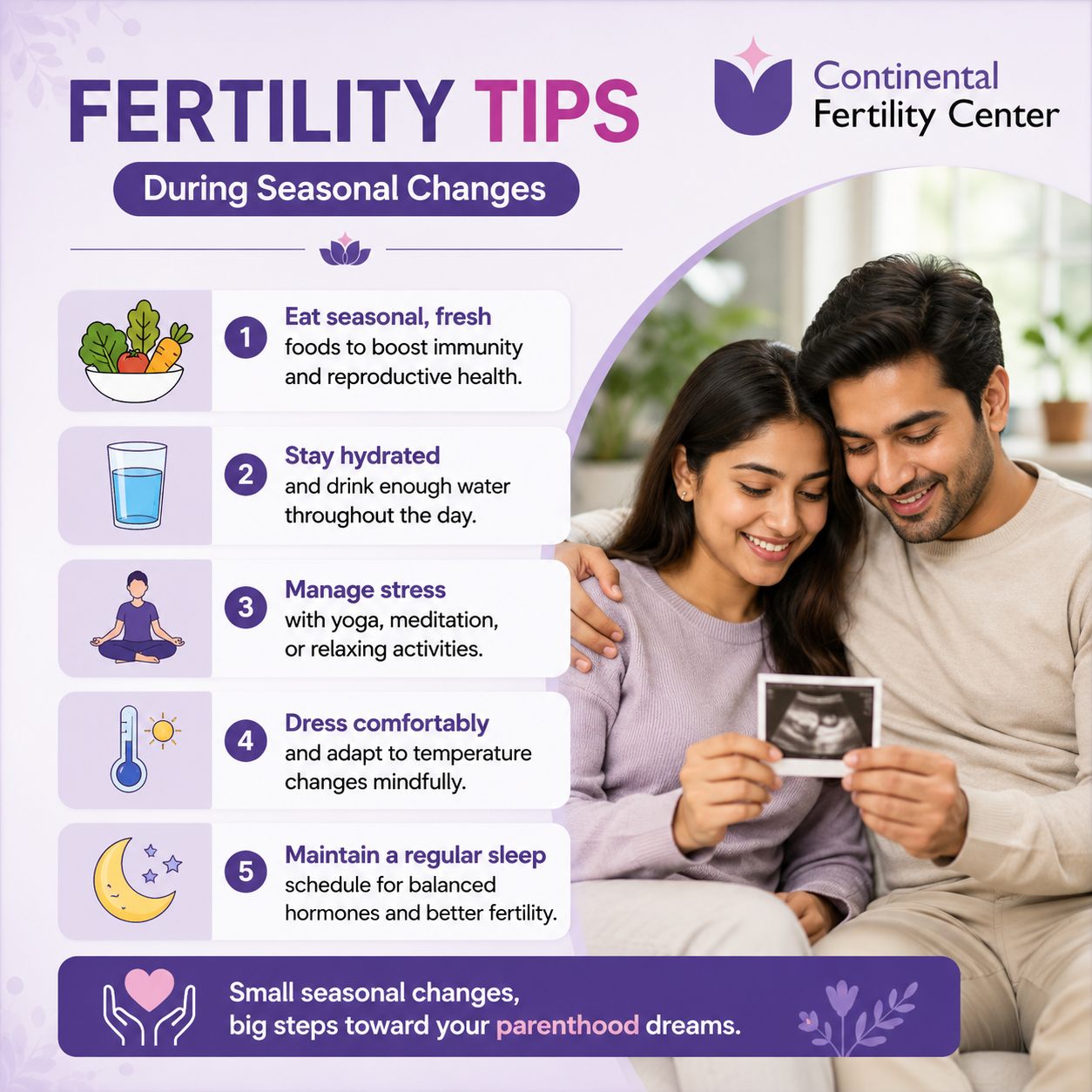
Every season brings changes that can influence fertility health, but simple lifestyle choices can make a meaningful difference. Staying hydrated, eating nutritious foods, maintaining physical activity, managing stress, and getting enough sleep all contribute to better reproductive health throughout the year. Following practical fertility tips during every season helps your body remain healthy and prepared for conception.
Understanding fertility during seasonal changes allows couples to make informed decisions that support long-term reproductive health. If you have concerns about fertility or have been trying to conceive without success, seeking expert medical guidance can help identify the underlying cause and provide the right fertility care at the right time.
If you are experiencing difficulty conceiving, irregular menstrual cycles, recurrent pregnancy loss, hormonal imbalance, or other reproductive health concerns, consult our best fertility clinic in Hyderabad at Continental Fertility Centre. Our experts provide comprehensive fertility evaluation, personalized treatment plans, and advanced reproductive care to help you achieve your dream of parenthood with confidence and compassion.
Related Blogs:
Frequently Asked Questions
Seasonal changes can influence fertility by affecting hormone levels, sleep quality, physical activity, and overall health. Changes in temperature, daylight hours, and weather patterns may impact ovulation, sperm quality, and reproductive hormones. For example, excessive summer heat can temporarily reduce sperm production, while winter illnesses may affect general well being. Seasonal allergies, dehydration, and nutritional deficiencies can also indirectly influence fertility. Maintaining a healthy lifestyle throughout the year helps reduce these effects. Eating a balanced diet, staying hydrated, exercising regularly, and managing stress support reproductive health. Although seasonal variations may have a small impact, most healthy couples can conceive in any season. If pregnancy does not occur after trying for an appropriate period, consult a fertility specialist for evaluation.
During summer, staying hydrated is one of the most important fertility tips. Dehydration may affect cervical mucus, making it more difficult for sperm to reach the egg. Avoid prolonged exposure to extreme heat, especially for men, as high temperatures can temporarily reduce sperm quality. Wear loose, breathable clothing and maintain a healthy body temperature. Eat fresh fruits, vegetables, and foods rich in antioxidants to protect reproductive cells. Limit sugary drinks and alcohol, which can contribute to dehydration. Continue moderate exercise but avoid excessive outdoor workouts during peak heat. Get enough sleep and protect yourself from heat related stress. Following these simple habits can help support fertility during the warmer months.
Cold weather itself does not usually reduce fertility, but winter lifestyle changes can have an impact. Reduced sunlight may lower vitamin D levels, which play a role in reproductive health. People also tend to spend more time indoors, exercise less, and consume heavier foods during winter. Seasonal illnesses such as flu can temporarily affect overall health and energy levels. Eating nutrient rich foods, staying physically active, and getting enough vitamin D through sunlight or supplements if recommended can help maintain reproductive health. Keeping stress levels under control and ensuring adequate sleep are equally important. Healthy habits throughout winter support hormone balance and improve the chances of conception.
Yes, adapting your diet to seasonal availability can benefit fertility. Fresh seasonal fruits and vegetables provide essential vitamins, minerals, and antioxidants that support egg and sperm health. During summer, include water rich foods such as watermelon, cucumber, and citrus fruits to stay hydrated. In winter, focus on warm meals containing whole grains, lean proteins, healthy fats, and immune supporting foods. Folate, iron, zinc, vitamin C, vitamin D, and omega 3 fatty acids remain important throughout the year. Avoid highly processed foods and excessive sugar intake. A balanced seasonal diet supports hormone production, improves reproductive function, and prepares the body for a healthy pregnancy.
Men can protect fertility by maintaining healthy habits regardless of the season. During hot weather, avoid prolonged exposure to high temperatures from hot tubs, saunas, or tight clothing, as heat may temporarily reduce sperm production. Stay hydrated and eat foods rich in antioxidants, zinc, selenium, and vitamin C. Exercise regularly without overtraining and maintain a healthy weight. During colder months, continue physical activity, get enough sunlight for vitamin D, and manage stress effectively. Avoid smoking, excessive alcohol consumption, and recreational drugs. Regular health checkups and timely treatment of infections also help maintain good sperm quality throughout the year.
Seasonal allergies generally do not directly reduce fertility, but severe symptoms may affect sleep, stress levels, and overall well being. Some medications may influence cervical mucus or cause temporary dryness, although this is usually not a major concern. Seasonal viral infections can temporarily affect sperm quality or delay ovulation due to fever or inflammation. Most people recover without long term effects on fertility. Staying up to date with vaccinations, practicing good hygiene, eating nutritious foods, and getting adequate rest support recovery. If symptoms are severe or persistent while trying to conceive, consult a healthcare provider before taking medications or supplements.
Yes, couples undergoing IVF should maintain consistent healthy habits throughout every season. Stay hydrated, eat a balanced diet, and follow your fertility specialist's recommendations. Avoid dehydration during summer and reduce the risk of infections during colder months. Take prescribed medications exactly as directed and attend all scheduled appointments. Manage stress with relaxation techniques, gentle exercise, and adequate sleep. Avoid smoking, alcohol, and unnecessary exposure to environmental toxins. Inform your fertility specialist if you develop a fever, severe illness, or infection before treatment. Careful seasonal health management helps support a smoother IVF journey and may improve treatment outcomes.
If you have been trying to conceive for 12 months without success, or for six months if the woman is over 35 years of age, consult a fertility specialist. Seek medical advice earlier if you have irregular menstrual cycles, known reproductive conditions, recurrent pregnancy loss, or concerns about sperm health. Seasonal changes alone rarely cause infertility, but they may highlight underlying health issues. A fertility evaluation can identify hormonal imbalances, ovulation problems, or male fertility concerns. Early diagnosis allows timely treatment and personalized guidance. A fertility specialist can recommend lifestyle changes, fertility testing, or advanced treatments based on your individual needs.