
What Happens After Embryo Transfer?
Embryo transfer is one of the most important stages of an IVF journey. After days of careful monitoring, egg retrieval, fertilization, and embryo development, the embryo transfer procedure brings hope for a successful pregnancy. Many couples feel excited, anxious, and curious about what happens next. It is natural to have questions about symptoms, activity levels, implantation, and the waiting period before the pregnancy test.
Understanding what happens after embryo transfer can help reduce stress and prepare you for the days ahead. Every person's experience is different. Some may notice mild symptoms, while others may not feel anything at all. Both situations can be completely normal. This guide explains what to expect after embryo transfer, how embryo implantation happens, what precautions to follow, and when to consult a fertility specialist.
What Is an Embryo Transfer?
An embryo transfer is the process of placing a healthy embryo into the uterus during an IVF procedure. The goal is to allow the embryo to attach to the uterine lining and develop into a healthy pregnancy.
The embryo transfer procedure is usually quick and does not require surgery. A fertility specialist carefully inserts a thin catheter through the cervix to place the embryo inside the uterus. The procedure is generally painless, and most patients can return home shortly afterward.
Whether you undergo a fresh embryo transfer or a frozen embryo transfer, the next few days are important because embryo implantation begins during this period.
What Happens Immediately After Embryo Transfer?
Immediately after the embryo transfer, you may rest for a short time at the fertility center before returning home. There is no evidence that prolonged bed rest improves pregnancy success. Your doctor will guide you on normal daily activities.
Some women may experience mild symptoms after embryo transfer, including:
- Mild cramping
- Light spotting
- Breast tenderness
- Bloating
- Fatigue
- Mild pelvic discomfort
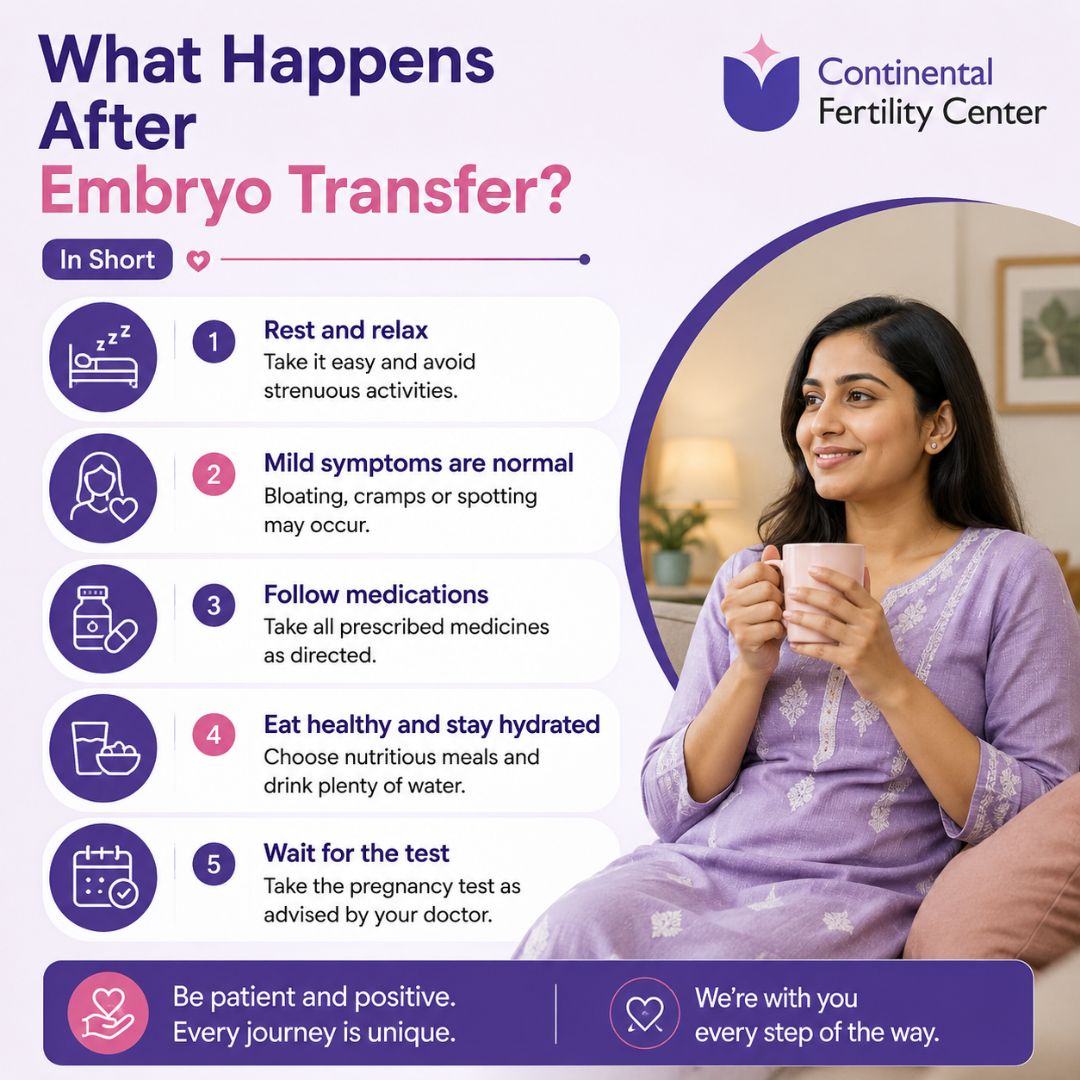
These symptoms are usually caused by hormonal medications or the embryo transfer procedure itself. They do not confirm or rule out pregnancy.
How Does Embryo Implantation Happen?
Embryo implantation is the process in which the embryo attaches to the lining of the uterus. This is one of the most important stages after embryo transfer.
The implantation process usually includes:
- The embryo begins to hatch from its outer shell.
- The embryo attaches to the uterine lining.
- Cells start growing into the lining.
- The placenta begins developing.
- Pregnancy hormones gradually increase.
Successful embryo implantation depends on several factors, including embryo quality, uterine health, hormonal balance, and overall reproductive health.
What Should You Do After Embryo Transfer?
Following your fertility specialist's instructions is the best way to support your IVF journey.
Follow these recommendations:
- Take prescribed medications on time.
- Eat a balanced and nutritious diet.
- Drink plenty of water.
- Get adequate sleep every night.
- Continue gentle daily activities.
- Reduce emotional stress as much as possible.
- Attend all scheduled follow-up appointments.
A healthy lifestyle supports your overall well-being during the waiting period after embryo transfer.
What Should You Avoid After Embryo Transfer?
While normal activities are generally safe, some precautions are recommended.
Avoid the following:
- Heavy lifting
- Intense exercise
- Smoking
- Alcohol consumption
- Recreational drugs
- Self-prescribed medications
- Excessive caffeine
- Hot tubs or saunas if advised by your doctor
Always consult your fertility specialist before starting any new medication or supplement.
What Symptoms Can You Expect After Embryo Transfer?
Many women closely watch for signs after embryo transfer. However, symptoms vary greatly from person to person.
Possible symptoms include:
- Mild abdominal cramps
- Light implantation spotting
- Breast soreness
- Increased tiredness
- Mood changes
- Frequent urination
- Mild nausea
It is also completely normal to have no symptoms after embryo transfer. The absence of symptoms does not mean the IVF procedure has failed.
How Long Does It Take to Know the Results?
The waiting period after embryo transfer is often called the two-week wait. During this time, embryo implantation occurs, and pregnancy hormone levels begin to rise if implantation is successful.
Doctors usually recommend a blood pregnancy test after the advised number of days rather than relying on home pregnancy tests. Blood tests provide more accurate results because fertility medications may affect home pregnancy test readings.
Fresh Embryo Transfer vs Frozen Embryo Transfer
- Both fresh embryo transfer and frozen embryo transfer are widely used in modern fertility treatment.
- Fresh embryo transfer is performed during the same IVF cycle after fertilization.
- Frozen embryo transfer uses embryos that were previously frozen and later thawed before transfer.
Both approaches can achieve excellent pregnancy outcomes. Your fertility specialist will recommend the most suitable option based on your medical history, age, reproductive health, and treatment plan.
When Should You Contact Your Fertility Specialist?
Although mild symptoms are common after embryo transfer, certain symptoms require immediate medical attention.
Contact your doctor if you experience:
- Heavy vaginal bleeding
- Severe abdominal pain
- High fever
- Difficulty breathing
- Persistent vomiting
- Severe swelling
- Sudden dizziness
Prompt medical care helps identify and manage any complications early.
Why Choose Continental Fertility Center?
Continental Fertility Center is one of the trusted destinations for advanced fertility care and comprehensive IVF treatment in Hyderabad. Our experienced fertility specialists provide personalized treatment plans designed to meet every patient's unique reproductive needs.
Patients benefit from:
- Experienced fertility specialists
- Advanced IVF procedures
- Modern embryology laboratory
- Personalized fertility treatment plans
- Comprehensive infertility evaluation
- Compassionate patient-centered care
- High standards of clinical excellence
- Multidisciplinary support throughout the fertility journey
Continental Hospitals is recognized for its commitment to quality healthcare and patient safety. The hospital is accredited by JCI, NABH, and QAI, reflecting internationally recognized standards in clinical care, safety, and healthcare excellence. These accreditations demonstrate our dedication to delivering trusted fertility and reproductive healthcare.
Conclusion
Embryo transfer is an important milestone in every IVF journey. Understanding what happens after embryo transfer helps you prepare for the days ahead with confidence. Following your doctor's advice, maintaining a healthy lifestyle, taking medications as prescribed, and staying positive can support your treatment journey. Whether you undergo a fresh embryo transfer or a frozen embryo transfer, every step brings you closer to achieving your dream of parenthood.
If you are experiencing infertility or planning an IVF procedure, consult our best fertility clinic in Hyderabad at Continental Fertility Center. Our expert team provides comprehensive fertility evaluation, advanced embryo transfer procedures, personalized treatment plans, and compassionate care to support you throughout your parenthood journey. Schedule your consultation today and take the next step toward building your family.
Related Blog Topics:
Frequently Asked Questions
Immediately after an embryo transfer, the embryo is placed inside the uterus using a thin catheter. The procedure is usually painless and takes only a few minutes to complete. Most women can rest briefly before returning home the same day. Mild cramping or light spotting may occur, which is generally considered normal. The embryo begins its natural journey inside the uterus and is not affected by standing, walking, or normal daily movements. There is no need for complete bed rest unless specifically advised by your fertility specialist. Your doctor will prescribe medications to support the uterine lining and improve the chances of implantation. It is important to follow all medication instructions carefully. Staying hydrated, eating nutritious meals, and avoiding unnecessary stress can support overall well being. Heavy lifting, smoking, alcohol, and strenuous exercise should be avoided. Emotional ups and downs are common during this waiting period. Your pregnancy blood test is usually scheduled about 10 to 14 days after the embryo transfer.
The timing of implantation depends on the stage of the embryo transferred. A day five blastocyst may begin implanting within one to three days after transfer, while a day three embryo may take slightly longer. During implantation, the embryo attaches to the uterine lining and begins developing further. Successful implantation is essential for pregnancy to occur. Every woman's body responds differently, so implantation timing can vary. Some women may notice mild cramping or light spotting, although many experience no symptoms at all. The absence of symptoms does not mean implantation has failed. Continuing fertility medications as prescribed is very important during this phase. Maintaining a healthy lifestyle and avoiding harmful habits can support the process. It is best to avoid taking an early home pregnancy test because it may provide inaccurate results. Your fertility specialist will recommend the ideal date for a blood pregnancy test to confirm implantation.
Many women experience little or no symptoms after embryo transfer, and this is completely normal. Mild cramping similar to menstrual discomfort may occur for a short time. Light spotting or pink discharge can also happen and is not always a cause for concern. Breast tenderness, bloating, fatigue, or mood changes are common because of progesterone medications. Some women notice increased vaginal discharge during this period. These symptoms may or may not indicate pregnancy. Every IVF journey is different, and symptom intensity varies from person to person. Severe abdominal pain, heavy bleeding, fever, or persistent vomiting should be reported to your doctor immediately. It is important not to compare your symptoms with those of others. Continue taking prescribed medications even if you do not feel any symptoms. The blood pregnancy test remains the most reliable way to determine whether the embryo transfer has been successful.
Routine bed rest after embryo transfer is generally not recommended by fertility specialists. Scientific studies have shown that prolonged bed rest does not improve implantation or pregnancy rates. Gentle daily activities such as walking around the house are usually safe. You can perform normal routine tasks unless your doctor advises otherwise. However, strenuous exercise, heavy lifting, and physically demanding work should be avoided. Adequate sleep and stress management are beneficial during the waiting period. Staying active with light movement may also support overall circulation and well being. It is important to follow your fertility clinic's personalized recommendations. Every patient has unique medical circumstances that may require different advice. Avoid smoking, alcohol, and recreational drugs throughout this period. Maintaining a balanced diet and staying hydrated are also important. If you have concerns about activity restrictions, discuss them directly with your fertility specialist.
A healthy and balanced diet is recommended after embryo transfer. Include fruits, vegetables, whole grains, lean proteins, dairy products, and healthy fats in your daily meals. Protein rich foods such as eggs, fish, beans, lentils, and nuts support overall health. Iron rich foods and foods containing folate are also beneficial during early pregnancy planning. Drink plenty of water to stay hydrated throughout the day. Limit processed foods, sugary drinks, and excessive caffeine intake. Avoid alcohol and smoking because they may negatively affect fertility and pregnancy. Raw seafood, undercooked meat, and unpasteurized dairy products should also be avoided. Small frequent meals may help if you experience bloating from fertility medications. Continue prenatal vitamins if prescribed by your doctor. There is no specific fertility superfood that guarantees implantation, but a nutritious diet supports overall reproductive health. Always consult your fertility specialist before taking herbal supplements or alternative remedies.
Your fertility specialist will usually recommend a blood pregnancy test about 10 to 14 days after embryo transfer. This test measures human chorionic gonadotropin levels and provides the most accurate result. Taking a home pregnancy test too early may produce false negative or false positive results. Some fertility medications can also affect early home pregnancy tests. Waiting until the recommended testing date helps avoid unnecessary confusion and anxiety. Even if you have pregnancy symptoms, confirmation requires a blood test. Continue taking all prescribed medications until your doctor advises otherwise. Do not stop progesterone or other fertility medications without medical guidance. If the blood test is positive, your doctor may repeat it after a few days to confirm appropriate hormone rise. An early ultrasound will usually be scheduled a few weeks later. Following your clinic's testing schedule is the best way to obtain reliable results.
After embryo transfer, avoid activities that place excessive physical stress on your body. Heavy lifting, high intensity workouts, running, and contact sports should be postponed until your doctor provides further guidance. Avoid smoking, alcohol consumption, and recreational drugs because they may reduce pregnancy success. Limit caffeine intake according to your fertility specialist's advice. Hot tubs, steam baths, and saunas should also be avoided because excessive heat may not be recommended. Follow all medication schedules exactly as prescribed. Maintain good hydration and eat balanced meals every day. Gentle walking and light household activities are generally considered safe. Manage stress through relaxation techniques, reading, meditation, or listening to music. Get enough sleep and avoid unnecessary physical exhaustion. If you experience severe pain, heavy bleeding, or unusual symptoms, contact your fertility clinic immediately.
You should contact your fertility specialist if you experience severe abdominal pain, heavy vaginal bleeding, fever, difficulty breathing, or persistent vomiting after embryo transfer. Mild cramping and light spotting are usually normal, but worsening symptoms require medical evaluation. Significant swelling, severe bloating, or sudden weight gain may indicate ovarian hyperstimulation syndrome in some patients. Never stop prescribed medications without consulting your doctor. If you accidentally miss a medication dose, contact your fertility clinic for instructions. Emotional stress and anxiety are common, and discussing your concerns with your healthcare team can be reassuring. Keep all scheduled follow up appointments and blood tests. Early communication helps address potential complications promptly. Most women complete the waiting period without serious problems. Your fertility team will guide you through every stage until pregnancy is confirmed or further treatment planning is needed.