

Omega 3 and Fertility: What Research Says
Planning for pregnancy often begins with improving overall health, and nutrition plays an important role in supporting fertility. Among the many nutrients linked to reproductive health, omega 3 has gained significant attention for its potential benefits in both men and women. Researchers continue to study how omega 3 fatty acids may influence egg quality, sperm health, hormone balance, and healthy pregnancy outcomes.
If you are preparing for parenthood, understanding what research says about omega 3 can help you make informed choices. While no single nutrient can guarantee pregnancy, adding omega 3 as part of a balanced fertility diet may support your fertility journey. This article explains the science behind omega 3, its role in fertility, food sources, supplements, and when to seek expert medical advice.
What Is Omega 3?
Omega 3 refers to a group of healthy fats that are essential for the body. Since the body cannot produce enough omega 3 fatty acids on its own, they must come from food or fertility supplements.
The three main types of omega 3 fatty acids include:
- EPA (Eicosapentaenoic Acid)
- DHA (Docosahexaenoic Acid)
- ALA (Alpha Linolenic Acid)
EPA and DHA are mainly found in fatty fish, while ALA is present in plant based foods such as flaxseeds, chia seeds, and walnuts.
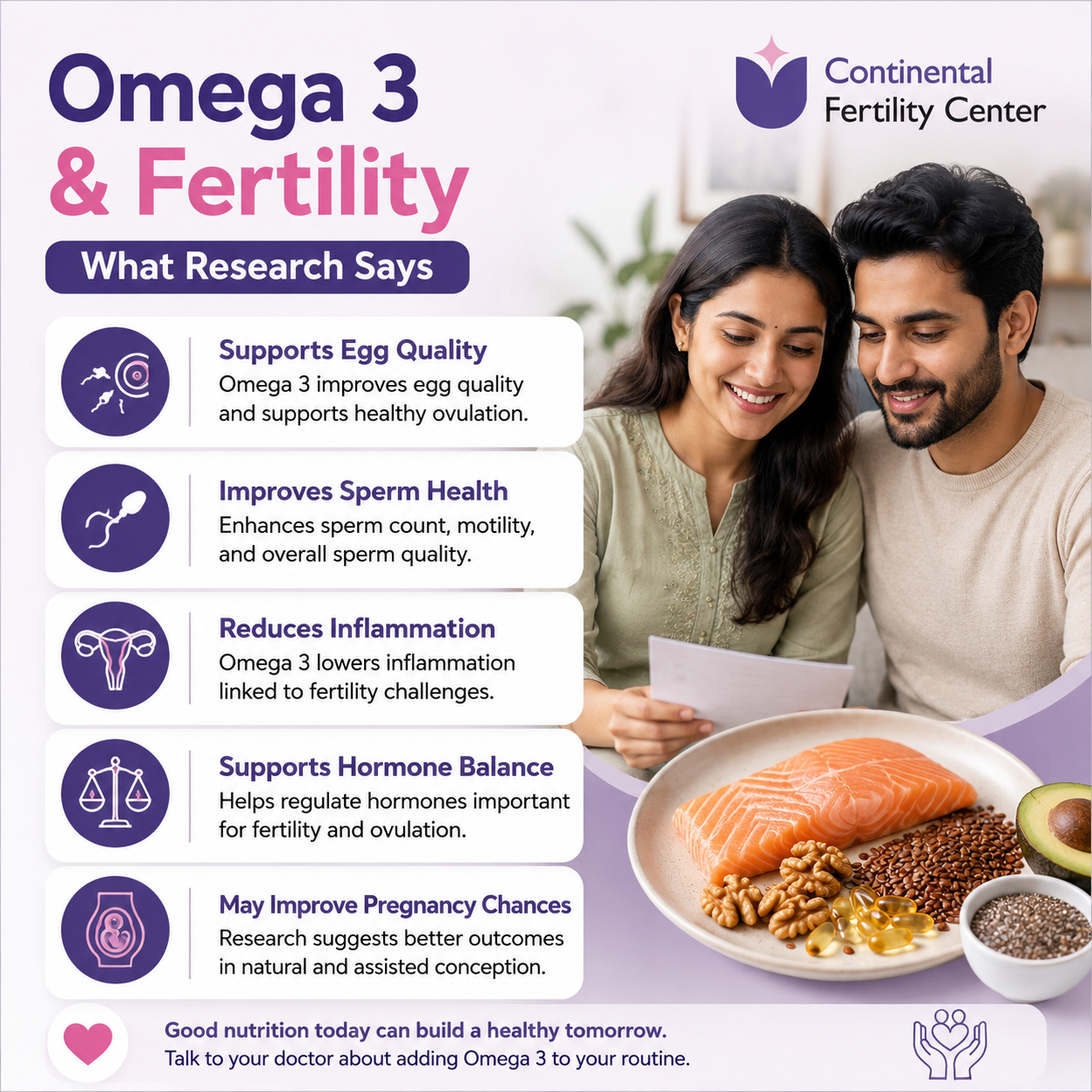
Why Is Omega 3 Important for Fertility?
Healthy nutrition supports every stage of reproduction. Research suggests that omega 3 contributes to several body functions that may positively affect fertility.
Some important roles include:
- Supports hormone production
- Helps reduce inflammation
- Promotes healthy blood flow to reproductive organs
- Supports egg and sperm quality
- Contributes to healthy fetal brain development after conception
These benefits make omega-3 an important part of a well-planned fertility nutrition strategy.
What Does Research Say About Omega 3 and Female Fertility?
Several studies have explored the relationship between omega 3 and female reproductive health. Although more research is still ongoing, current evidence suggests encouraging results.
Can Omega 3 Improve Egg Quality?
Egg quality naturally declines with age. Researchers believe that omega 3 fatty acids help maintain healthy cell membranes around the eggs, which may support better egg development.
Some studies suggest women with higher dietary intake of omega 3 may have healthier ovarian function compared to those with lower intake.
Does Omega 3 Help Hormone Balance?
Hormones control ovulation and the menstrual cycle. Chronic inflammation may interfere with hormonal balance.
Research indicates that omega 3 may help regulate inflammation, allowing hormones to function more effectively in some women.
Can Omega 3 Support IVF Success?
Some research has found that women with adequate levels of omega 3 may experience improved embryo quality and better implantation potential during IVF treatment. However, results vary between studies, and omega 3 should be viewed as one part of a complete fertility treatment plan rather than a standalone solution.
Can Omega 3 Improve Male Fertility?
Yes. Fertility depends on both partners. Male reproductive health is equally important.
Research suggests that omega 3 fatty acids may improve several aspects of sperm health.
Possible benefits include:
- Better sperm motility
- Improved sperm shape
- Higher sperm concentration
- Healthier sperm cell membranes
- Reduced oxidative stress
These improvements may increase the chances of natural conception or support assisted reproductive treatments.
Which Foods Are Rich in Omega 3?
A healthy fertility diet should include natural food sources of omega 3 whenever possible.
Good food sources include:
- Salmon
- Sardines
- Mackerel
- Tuna in moderation
- Flaxseeds
- Chia seeds
- Walnuts
- Soybeans
- Canola oil
Eating a variety of these foods provides valuable nutrients beyond omega 3, including protein, vitamins, and minerals that support reproductive health.
Should You Take Omega 3 Supplements?
Some individuals may not consume enough omega 3 through diet alone. In such cases, doctors may recommend fertility supplements containing EPA and DHA.
Before starting supplements, it is important to remember:
- Do not self-prescribe high doses.
- Discuss supplements with your fertility specialist.
- Choose high-quality products from trusted manufacturers.
- Follow the dosage recommended by your doctor.
Supplements should complement a healthy lifestyle rather than replace nutritious eating habits.
Can Omega 3 Reduce Inflammation?
Inflammation has been linked with several reproductive conditions, including endometriosis and polycystic ovary syndrome.
Research suggests omega 3 fatty acids possess natural anti-inflammatory properties that may support reproductive health. While omega 3 is not a treatment for these conditions, it may contribute to overall reproductive wellness when included as part of comprehensive medical care.
How Can You Include Omega 3 in Your Daily Fertility Diet?
Simple dietary changes can help increase omega 3 intake.
Try these practical tips:
- Eat fatty fish two to three times each week.
- Add chia seeds to smoothies or yogurt.
- Sprinkle flaxseed powder over breakfast cereals.
- Snack on a handful of walnuts.
- Include soybean-based foods in meals.
- Speak with a fertility specialist before taking supplements.
Small, consistent dietary improvements often produce better long-term health benefits than sudden restrictive diets.
Is Omega 3 Alone Enough to Improve Fertility?
No. Fertility is influenced by many factors.
A successful fertility journey usually depends on:
- Age
- Overall health
- Hormonal balance
- Body weight
- Medical conditions
- Lifestyle habits
- Timely fertility evaluation
- Appropriate fertility treatment
Omega 3 is one supportive component of fertility nutrition, but it cannot replace expert medical assessment or fertility treatment when needed.
When Should You See a Fertility Specialist?
Consider consulting a fertility specialist if:
- You have been trying to conceive without success.
- Your menstrual cycles are irregular.
- You have been diagnosed with PCOS or endometriosis.
- You have experienced recurrent pregnancy loss.
- Male fertility concerns have been identified.
- You are planning IVF or other fertility treatments.
- You want personalized advice about fertility supplements and nutrition.
Early evaluation helps identify the underlying cause and allows treatment to begin at the right time.
Why Choose Continental Fertility Center?
Choosing the right fertility center is one of the most important decisions in your parenthood journey. At Continental Fertility Center, patients receive comprehensive fertility care supported by experienced specialists, advanced reproductive technology, and personalized treatment plans.
Why families trust Continental Fertility Center:
- Experienced fertility specialists with multidisciplinary expertise.
- Comprehensive evaluation for both male and female infertility.
- Advanced diagnostic facilities and modern fertility treatments.
- Personalized fertility nutrition and lifestyle guidance.
- Compassionate care focused on every stage of the fertility journey.
- Ethical, evidence-based treatment approach.
- Backed by Continental Hospitals, one of the best hospitals in Hyderabad.
- A hospital accredited by JCI, NABH, and QAI, reflecting high standards in patient safety, clinical excellence, and quality healthcare.
Conclusion
Current research suggests that omega 3 may support reproductive health by promoting hormone balance, reducing inflammation, improving egg quality, and enhancing sperm health. While omega 3 fatty acids are not a cure for infertility, they can play a valuable role in a healthy fertility diet and overall fertility nutrition plan.
Every fertility journey is unique. The best results often come from combining healthy lifestyle choices, balanced nutrition, timely medical evaluation, and expert fertility care. If you are planning pregnancy or experiencing difficulty conceiving, seeking guidance from fertility specialists can help you move forward with confidence.
If you are facing infertility concerns, planning IVF, or want expert guidance on omega 3, fertility nutrition, and the right fertility supplements, consult the experienced fertility specialists in Hyderabad at Continental Fertility Center. Our team offers personalized evaluation, advanced fertility treatments, and compassionate care to help you achieve your dream of parenthood with confidence.
Related Blogs:
Frequently Asked Questions
Research suggests that omega 3 fatty acids may support fertility in both men and women by promoting overall reproductive health. In women, omega 3 may help maintain healthy egg quality, support regular ovulation, and create a healthier environment for conception. In men, omega 3 is associated with improved sperm quality, including better motility, morphology, and concentration. These healthy fats also help reduce inflammation, which may positively influence reproductive function. While omega 3 alone cannot treat infertility, it can be an important part of a balanced fertility-focused diet. The benefits are greater when combined with a healthy lifestyle, proper nutrition, exercise, and medical guidance. Couples trying to conceive should speak with a fertility specialist before starting supplements.
Several studies have explored the relationship between omega 3 intake and assisted reproductive treatments such as IVF. Some research suggests that women with higher omega 3 levels may have better embryo quality and improved implantation rates. Omega 3 may also support the uterine lining and reduce inflammation, creating a more favorable environment for pregnancy. However, scientific findings are not completely consistent, and more large-scale clinical studies are needed. Omega 3 should not be viewed as a replacement for fertility treatments or medications. Instead, it may serve as a supportive nutritional strategy during fertility care. Always discuss dietary supplements with your fertility specialist before beginning IVF treatment.
The three main types of omega 3 fatty acids are EPA, DHA, and ALA. EPA and DHA, commonly found in fatty fish and fish oil supplements, are considered the most beneficial for reproductive health because they are readily used by the body. DHA plays an important role in cell membrane health, while EPA helps regulate inflammation. ALA, found in flaxseeds, chia seeds, and walnuts, can also contribute to omega 3 intake, although only a small amount is converted into EPA and DHA. A balanced diet including omega 3-rich foods is generally recommended. Your healthcare provider can advise whether supplementation is appropriate based on your individual needs.
Research indicates that omega 3 fatty acids may support healthy sperm production and function. Studies have linked adequate omega 3 intake with improved sperm motility, better morphology, and higher sperm concentration. Omega 3 contributes to healthy sperm cell membranes, which are important for movement and fertilization. It may also help reduce oxidative stress that can damage sperm DNA. While results vary among individuals, maintaining sufficient omega 3 intake may be beneficial for men planning to conceive. Lifestyle changes such as quitting smoking, exercising regularly, and maintaining a healthy weight can further improve reproductive health. Medical evaluation remains essential for persistent fertility concerns.
You can naturally increase omega 3 intake by eating fatty fish such as salmon, sardines, mackerel, and trout at least two times a week. Plant-based sources include flaxseeds, chia seeds, walnuts, and hemp seeds, although they mainly provide ALA. Including these foods as part of a balanced diet supports overall reproductive health. If dietary intake is insufficient, your doctor may recommend a high-quality omega 3 supplement. It is important not to exceed recommended doses without medical advice. Combining healthy eating with regular physical activity, stress management, and adequate sleep provides the best support for fertility. Personalized nutrition guidance from a fertility specialist or dietitian can also be helpful.
Many healthcare professionals recommend that women planning pregnancy maintain adequate omega 3 intake because it supports overall reproductive and maternal health. DHA is particularly important for fetal brain and eye development after conception. Before pregnancy, omega 3 may help support healthy ovulation and reproductive function as part of a balanced diet. However, supplementation should be tailored to individual health conditions and nutritional needs. Women should choose high-quality, purified supplements if recommended by their healthcare provider. It is also important to avoid fish with high mercury levels. Always consult your fertility specialist or obstetrician before starting any supplement regimen.
Omega 3 supplements are generally considered safe for most people when taken in recommended amounts. During fertility treatment, your doctor may advise whether supplementation is appropriate based on your medical history, medications, and treatment plan. High doses may increase bleeding risk in some individuals, particularly those taking blood-thinning medications. Choosing a reputable supplement that has been tested for purity and contaminants is important. Supplements should complement, not replace, a healthy diet and prescribed fertility treatments. Inform your fertility specialist about all vitamins and supplements you are taking. Personalized medical advice ensures safe and effective use.
You should consider consulting a fertility specialist if you are under 35 years of age and have been trying to conceive for one year without success. If you are 35 or older, seeking evaluation after six months of unsuccessful attempts is generally recommended. Couples with irregular menstrual cycles, recurrent pregnancy loss, known reproductive disorders, or male fertility concerns should seek medical advice sooner. A fertility specialist can identify underlying causes through appropriate testing and recommend personalized treatment options. Nutritional guidance, including advice on omega 3 intake, may also be part of your care plan. Early evaluation often improves the chances of successful conception and healthy pregnancy outcomes.