

What Are Sperm Structure Abnormalities? Causes, Types and Fertility Impact
Sperm structure abnormalities refer to changes in the size, shape, or appearance of sperm cells. These changes, also called abnormal sperm morphology, can sometimes affect the sperm's ability to reach and fertilize an egg. Sperm morphology is an important part of male fertility evaluation, along with sperm count and sperm movement.
Sperm structure abnormalities do not always mean a man cannot father a child. Many men with abnormal sperm morphology can achieve pregnancy naturally or with fertility treatment. Understanding the causes, types, and fertility impact can help couples choose the right treatment with guidance from a fertility specialist at Continental Fertility Center.
What Is Normal Sperm Morphology?
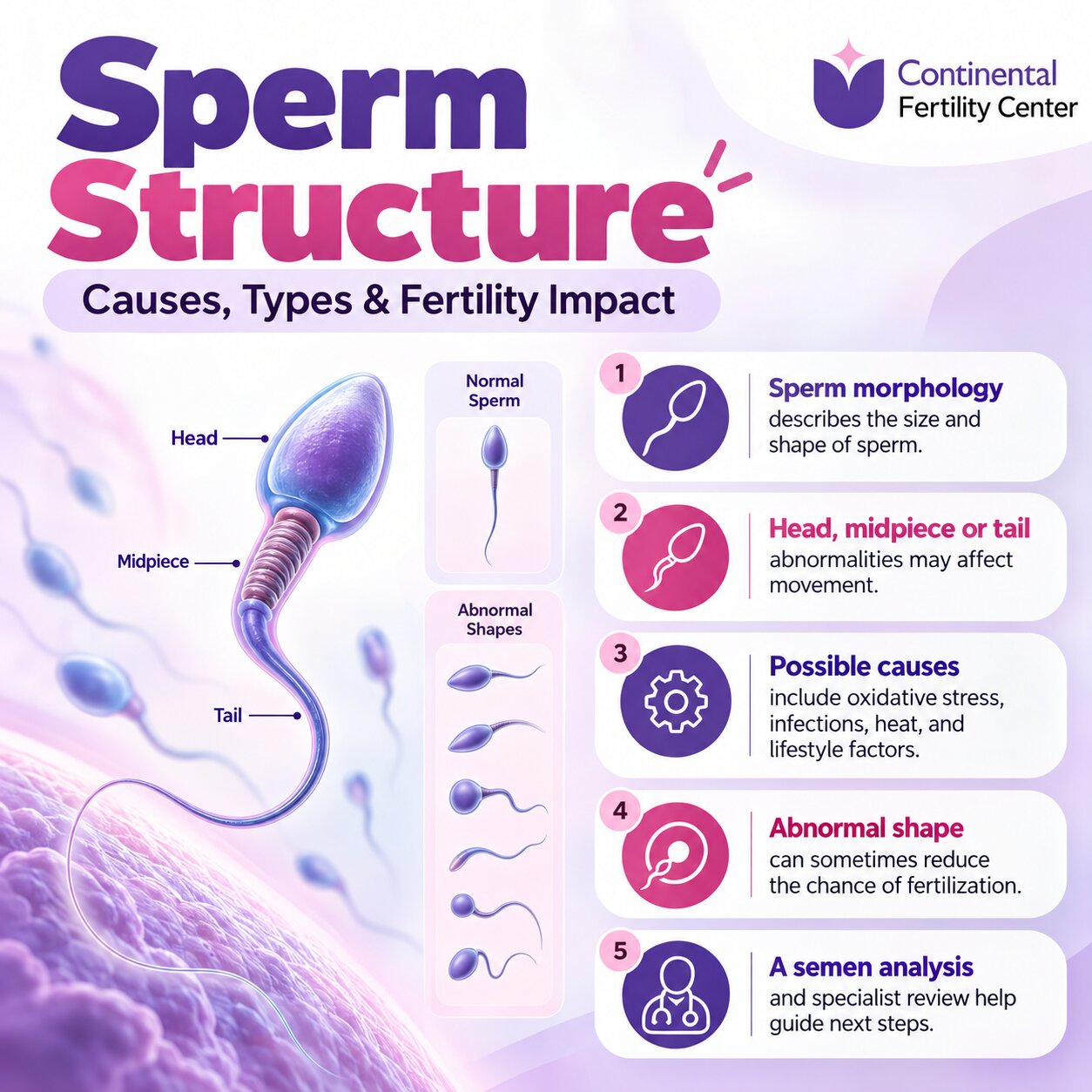
Normal sperm typically have an oval-shaped head, a well-defined middle section, and a single tail that helps them swim. These structures work together to support movement, egg penetration, and fertilization.
A sperm morphology test, usually performed as part of a semen analysis, evaluates the percentage of sperm that meet established standards for normal shape. Results must be interpreted alongside other semen parameters and the couple's overall fertility history.
What Are the Different Types of Sperm Structure Abnormalities?
Sperm abnormalities are generally classified according to the affected part of the sperm.
Sperm Head Defects: The head may be too large, too small, misshapen, or irregular. Since the head contains genetic material and helps the sperm interact with the egg, certain defects may affect fertilization.
Sperm Midpiece Abnormalities: The middle section contains structures that help provide energy for movement. Defects may affect the sperm's ability to swim efficiently
Sperm Tail Defects: A short, bent, coiled, or multiple tail structure may interfere with sperm movement and the ability to reach the egg.
Mixed Morphological Defects: Some sperm may have abnormalities affecting more than one part of their structure.
The presence of these abnormalities does not automatically indicate infertility. Their significance depends on the overall semen analysis and clinical findings.
What Causes Sperm Structure Abnormalities?
Several factors can contribute to abnormal sperm morphology. In some cases, the exact cause may not be identified.
Common contributing factors include:
- Oxidative stress that can damage sperm cells
- Smoking and excessive alcohol consumption
- Exposure to environmental toxins or excessive heat
- Hormonal imbalances
- Certain infections or reproductive health conditions
- Genetic factors affecting sperm development
- Varicocele, or enlarged veins around the testicles
- Some medications or medical treatments
Healthy lifestyle habits may support sperm quality, but treatment depends on identifying any underlying medical cause.
How Do Sperm Structure Abnormalities Affect Male Fertility?
Sperm morphology and male fertility are related, but shape alone cannot determine whether conception is possible. Some structural defects may affect sperm movement, interaction with the egg, or fertilization.
However, men with a low percentage of normally shaped sperm may still achieve natural pregnancy, particularly when sperm count and motility are satisfactory. A fertility specialist evaluates all relevant factors before recommending treatment.
How Are Sperm Structure Abnormalities Diagnosed?
A sperm morphology test is usually included in a semen analysis performed by a qualified laboratory. The sample is examined under a microscope to assess sperm shape and other important parameters.
Depending on the findings, the doctor may recommend:
- A repeat semen analysis to confirm results
- A medical history and physical examination
- Hormone testing when indicated
- Evaluation for varicocele or infection when suspected
- Additional fertility investigations based on individual needs
What Treatment Options Are Available?
Treatment depends on the cause, severity, and overall fertility status of the couple. Options may include lifestyle changes, treatment of underlying medical conditions, or assisted reproductive techniques such as IVF or intracytoplasmic sperm injection (ICSI), when appropriate.
Why Choose Continental Fertility Center?
Continental Fertility Center offers personalized fertility evaluation and treatment planning supported by experienced specialists and modern clinical facilities. Continental Hospitals holds NABH and NABL accreditations, reflecting established standards in healthcare quality, patient safety, and laboratory services.
Patients benefit from a comprehensive approach that considers both male and female fertility factors, appropriate diagnostic testing, individualized treatment recommendations, and continued medical guidance. For couples seeking the best hospital in Hyderabad for fertility evaluation, choosing a center that emphasizes evidence-based care and informed decision-making is important.
Conclusion
Sperm structure abnormalities can influence sperm function and fertility, but they do not automatically prevent pregnancy. Understanding abnormal sperm morphology through proper testing helps doctors assess sperm quality and recommend suitable options. With an individualized evaluation and appropriate medical guidance, couples can make informed decisions about their fertility journey.
If you have abnormal semen analysis results or have been trying to conceive without success, consult our best fertility specialist in Hyderabad at Continental Fertility Center. Early evaluation can help identify possible causes and guide appropriate treatment.
Related Blogs:
Frequently Asked Questions
Sperm structure abnormalities refer to changes in the normal shape or appearance of sperm. A typical sperm has a head, midpiece, and tail. The head contains genetic material needed for fertilization. The midpiece provides energy to support movement. The tail helps sperm swim toward the egg. Abnormalities can affect one or more of these parts. Some sperm may have unusually shaped heads or irregular tails. Others may have problems involving the midpiece. These changes are assessed through a semen analysis that includes sperm morphology. Having abnormal sperm does not automatically mean a man is infertile. Fertility also depends on sperm count, movement, and other reproductive factors. A fertility specialist can interpret the results and recommend appropriate next steps.
Abnormal sperm shape can develop for several reasons. In some men, the exact cause cannot be identified. Genetic factors may affect how sperm develop. Hormonal imbalances can sometimes influence sperm production. Varicocele, or enlarged veins in the scrotum, may affect sperm health. Infections or inflammation of the reproductive tract can also contribute. Smoking and excessive alcohol consumption may negatively affect reproductive health. Exposure to certain environmental toxins may influence sperm quality. High temperatures affecting the testes may also play a role. Some medicines and medical treatments can affect sperm production. Oxidative stress may damage developing sperm cells. A medical evaluation can help identify possible contributing factors and guide treatment.
Sperm abnormalities are commonly classified according to the part of the sperm affected. Head abnormalities may include unusually large, small, or irregularly shaped heads. Some sperm may have tapered or poorly formed heads. A missing or abnormal acrosome can affect the sperm's ability to interact with the egg. Midpiece abnormalities may involve irregular shape or alignment. Some sperm have bent, coiled, or unusually short tails. Other sperm may have multiple tails or lack a tail. These changes can affect sperm movement or function. A semen analysis examines sperm morphology under laboratory conditions. Strict assessment criteria are used to classify normal and abnormal forms. Finding some abnormal sperm is common in semen samples. A fertility specialist interprets the overall results alongside sperm count and motility.
Abnormal sperm shape can sometimes contribute to male infertility. The impact depends on the type and extent of the abnormalities. Some structural changes may interfere with sperm movement or fertilization. However, abnormal morphology alone does not confirm infertility. Many semen samples contain a mixture of normal and abnormal sperm. Other factors, including sperm count and motility, also influence fertility. Female reproductive health and the timing of intercourse are important as well. Some men with low normal morphology can still conceive naturally. A semen analysis helps assess sperm characteristics. Doctors may recommend repeating the test because results can vary over time. Additional investigations may be needed when other abnormalities are present. A fertility specialist can explain the results and discuss suitable treatment options.
Sperm structure abnormalities are usually assessed through a semen analysis. The test examines sperm count, movement, and morphology. A semen sample is collected according to laboratory instructions. The laboratory examines sperm under a microscope. Specialists assess the shape of the head, midpiece, and tail. Morphology results are reported as the percentage of sperm with normal forms. The interpretation depends on the assessment criteria used by the laboratory. One abnormal result does not always represent a permanent problem. Sperm characteristics can vary because of illness, lifestyle, and other factors. Your doctor may recommend another semen analysis when appropriate. A medical history and physical examination may help identify underlying causes. Additional tests are considered based on the individual's fertility assessment.
Sperm quality may improve in some men when contributing factors are addressed. Maintaining a balanced diet supports overall reproductive health. Regular physical activity can help maintain a healthy weight. Avoiding smoking can benefit sperm health. Limiting alcohol consumption may also be helpful. Adequate sleep and stress management support general well-being. Avoiding excessive heat exposure around the testes may be advisable. Certain infections and medical conditions may require treatment. Sperm development takes approximately two to three months. Changes in lifestyle may therefore take time to influence semen results. However, not all structural abnormalities are reversible. Evidence that supplements consistently improve sperm morphology is limited. A fertility specialist can recommend appropriate changes based on test results.
IVF may help some couples experiencing fertility problems related to sperm abnormalities. The most suitable treatment depends on the complete fertility assessment. Conventional IVF involves combining eggs and sperm in a laboratory. In selected cases, intracytoplasmic sperm injection, or ICSI, may be recommended. ICSI involves injecting a single sperm directly into an egg. It can help overcome certain fertilization difficulties associated with sperm problems. However, abnormal morphology alone does not automatically mean ICSI is necessary. Sperm count, motility, previous fertilization outcomes, and other factors influence the decision. Female age and ovarian health are also important considerations. The fertility team may recommend additional tests before selecting a treatment. Neither IVF nor ICSI guarantees pregnancy. A fertility specialist can explain the expected benefits, limitations, and risks of each option.
Abnormal sperm shape alone does not necessarily mean a baby will have birth defects. Sperm morphology describes the physical appearance of sperm cells. It does not directly establish whether their genetic material is normal. Some underlying conditions affecting sperm may also influence DNA quality. However, morphology results alone cannot reliably predict genetic problems in a future child. Many men with abnormal sperm morphology father healthy children. Fertilization and pregnancy outcomes depend on several reproductive factors. Additional testing may be considered when there are specific medical indications. Genetic counselling may be appropriate in certain cases of severe sperm abnormalities or a relevant family history. Your doctor can explain whether further investigations are necessary. Avoid interpreting a single semen analysis as a prediction of a child's health. A specialist can provide guidance based on your individual circumstances.
Consider consulting a fertility specialist if a semen analysis shows abnormal sperm morphology. Medical advice is also helpful when sperm count or movement is reduced. Couples who have difficulty conceiving may benefit from an early fertility assessment. Evaluation is generally recommended after 12 months of regular unprotected intercourse without pregnancy. Seek assessment after six months if the female partner is 35 or older. Earlier evaluation may be appropriate when known reproductive health problems exist. A specialist will review medical history and previous test results. Repeat semen testing may be recommended to confirm the findings. Further tests can help identify possible causes of sperm abnormalities. Treatment may involve lifestyle changes or management of an underlying condition. Assisted reproductive options can be discussed when clinically appropriate. Early evaluation helps couples understand their options and plan the next steps.