

IVF Treatment: Step-by-Step Process Explained
The dream of parenthood is a profound journey, and for many, in vitro fertilization (IVF) serves as the bridge to making that dream a reality. While the medical terminology can sometimes feel overwhelming, the IVF procedure step-by-step is a structured, scientific, and highly successful method of assisted reproduction.
By breaking down the IVF procedure step by step, we aim to provide clarity and confidence to couples embarking on this path. This guide explores the medical milestones of the IVF procedure step by step and explains why choosing a specialized center is vital for your success.
Understanding In Vitro Fertilization
In vitro fertilization, commonly known as IVF, is a process where an egg is combined with sperm outside the body in a laboratory setting. Once the embryo forms, it is placed back into the uterus. This IVF procedure step-by-step bypasses various fertility roadblocks such as blocked fallopian tubes, ovulation disorders, or male factor infertility.
The IVF Procedure Step by Step
Phase 1: Preparation and Ovarian Stimulation
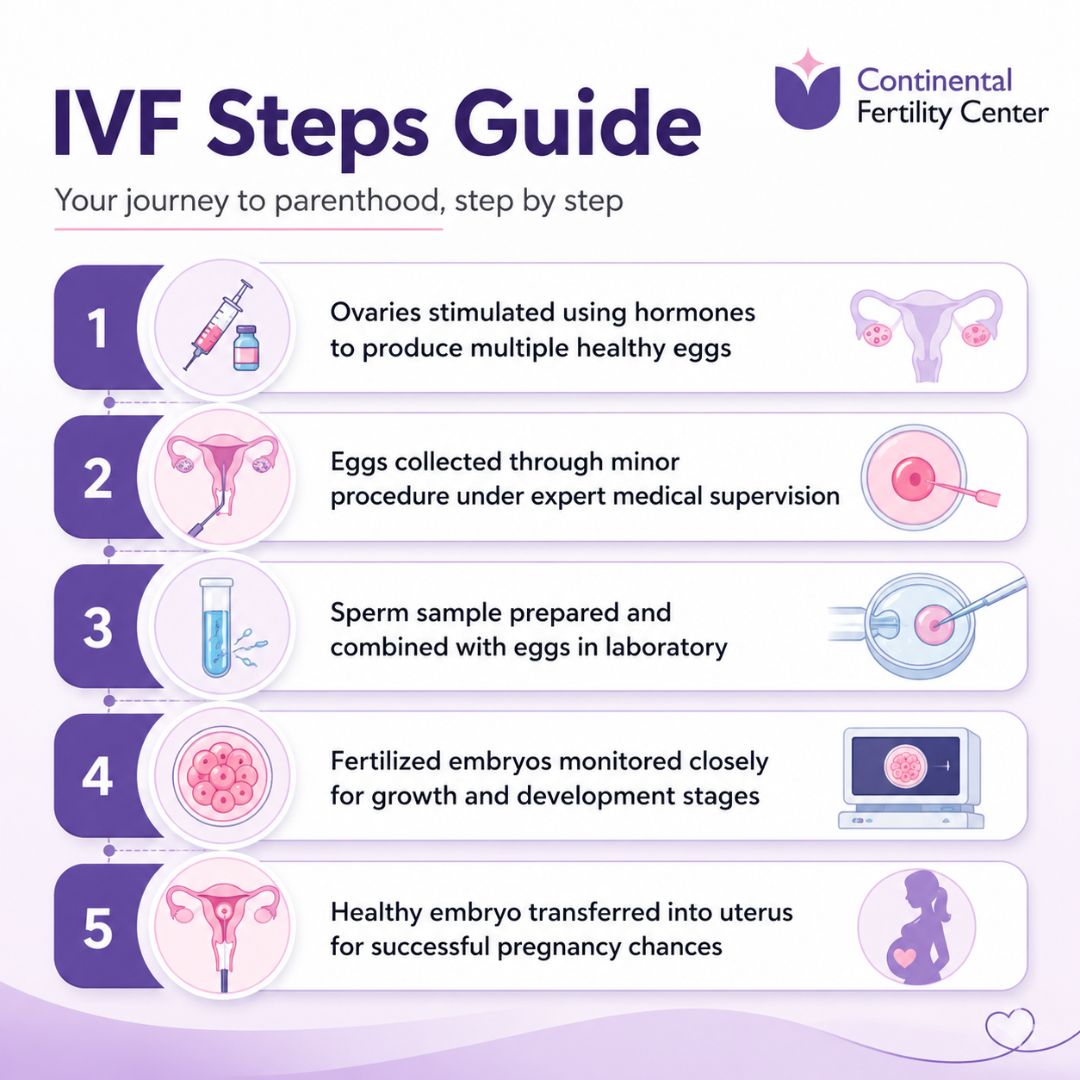
The first stage of the IVF procedure, step by step, involves preparing the body to produce multiple healthy eggs. In a natural cycle, a woman typically produces one egg. To increase the chances of success during the IVF process, fertility medications are used to stimulate the ovaries to develop more follicles. During this time, the medical team uses ultrasounds and blood tests to monitor the growth of these follicles. This monitoring ensures the eggs are developing at an ideal pace.
Phase 2: The Trigger Injection
Once the follicles reach the appropriate size, a specific hormone injection, often called the "trigger shot," is administered. This is a critical moment in the IVF procedure step by step because it finalizes the maturation of the eggs and prepares them for retrieval. Timing is essential here; the retrieval must happen shortly after this injection.
Phase 3: Egg Retrieval
The next major milestone in the IVF procedure, step by step, is the egg retrieval. This is a minor surgical procedure performed under light sedation, ensuring the patient feels no discomfort. Using ultrasound guidance, a thin needle is used to collect the eggs from the follicles. The entire IVF procedure for retrieval usually takes about 20 to 30 minutes.
Phase 4: Sperm Collection and Fertilization
On the same day as the egg retrieval, a sperm sample is collected. In the laboratory, the IVF treatment continues as the highest-quality sperm are isolated. The eggs and sperm are then placed together in a controlled environment to allow fertilization. In some cases, a technique called ICSI (Intracytoplasmic Sperm Injection) is used, where a single sperm is directly injected into an egg to assist the fertilization stage of the IVF procedure step by step.
Phase 5: Embryo Development
Following fertilization, the embryos are monitored closely by embryologists. Over the next three to five days, the embryos divide and grow. The medical team looks for healthy cell division to identify the strongest embryos for transfer. This stage is a pivotal part of the IVF journey, as the health of the embryo is a primary factor in a successful pregnancy.
Phase 6: Embryo Transfer
The final clinical stage of the IVF procedure step-by-step is the embryo transfer. This is a simple procedure, similar to a pap smear, where one or more embryos are placed into the uterus using a thin catheter. It does not require anesthesia. The goal is for the embryo to implant in the uterine lining, leading to a successful pregnancy.
Phase 7: The Final Wait and Pregnancy Test
After the transfer, there is a waiting period of approximately two weeks. During this time, the body is supported with progesterone to maintain the uterine lining. The conclusion of the IVF procedure step-by-step is a blood test to confirm if pregnancy has occurred.
Why Choose the Continental Fertility Center?
Selecting the best hospital in Hyderabad for your fertility needs is a decision that impacts your results and your emotional well-being. Continental Fertility Centre stands out as a leader in reproductive medicine for several reasons.
World-Class Accreditations
Continental Hospitals is recognized for its commitment to international standards of safety and excellence. We hold prestigious accreditations, including JCI (Joint Commission International) and NABH (National Accreditation Board for Hospitals & Healthcare Providers). These certifications ensure that every IVF procedure, step by step, is conducted in an environment that prioritizes patient safety, hygiene, and clinical precision.
Advanced Laboratory Technology
The success of an IVF treatment depends heavily on the laboratory environment. Our center is equipped with cutting-edge embryology labs that maintain optimal conditions for embryo growth. From advanced incubators to precise air filtration systems, we provide the best possible start for your future child.
Expert Multidisciplinary Team
At Continental, patients benefit from a team of experienced reproductive endocrinologists, skilled embryologists, and compassionate counselors. We understand that the IVF journey is as much emotional as it is physical. Our experts guide you through the IVF procedure step by step, providing personalized care tailored to your unique health profile.
Comprehensive Care Under One Roof
As part of Continental Hospitals, our fertility center has access to a wide range of specialists. Whether you require nutritional guidance, stress management, or consultation with other medical departments, everything is available within one facility. This integrated approach makes us a preferred choice for those seeking the best hospital in Hyderabad.
Key Factors for IVF Success
Success in the IVF procedure step-by-step can be influenced by several factors:
- Age: The quality and quantity of eggs are often related to maternal age.
- Lifestyle: Maintaining a healthy weight and avoiding smoking or excessive alcohol can improve outcomes.
- Ovarian Reserve: The initial number of eggs available impacts the stimulation phase.
- Uterine Health: A healthy uterine lining is essential for the embryo transfer stage of the IVF procedure.
Preparing for Your IVF Journey
Before starting the IVF procedure step by step, many patients find it helpful to focus on digital wellness and physical health. Reducing stress and ensuring proper nutrition can create a positive environment for the IVF process. Our team provides detailed checklists to help you prepare for each phase of the IVF procedure.
Conclusion
The IVF procedure step-by-step is a testament to how far medical science has come in helping families grow. While the process requires patience and resilience, the destination makes every step worthwhile. By choosing a facility with global accreditations and a track record of excellence, you ensure that you are receiving the highest standard of care available.
If you are facing challenges with natural conception, remember that you do not have to navigate this path alone. The IVF treatment options available today are more advanced and accessible than ever before.
If you suffer from infertility or have been struggling to conceive, expert help is available. Contact our specialists today to discuss how the IVF procedure step-by-step can be customized for your needs. Consult our best fertility specialist in Hyderabad at Continental Fertility Centre
Related Blog Topics:
Frequently Asked Questions
IVF (In Vitro Fertilization) is a fertility treatment where eggs are retrieved from the ovaries, fertilized with sperm in a lab, and the resulting embryo is transferred into the uterus.
IVF is recommended for couples facing infertility due to blocked fallopian tubes, low sperm count, ovulation disorders, advanced maternal age, or unexplained infertility.
The IVF process includes ovarian stimulation, egg retrieval, sperm collection, fertilization in the lab, embryo culture, and embryo transfer into the uterus.
A typical IVF cycle takes about 4 to 6 weeks, including ovarian stimulation, egg retrieval, fertilization, and embryo transfer.
Most IVF procedures are minimally invasive. Some women may experience mild discomfort during injections and egg retrieval, but pain is generally manageable.
IVF success rates vary depending on age, health, and underlying fertility issues. Younger women typically have higher success rates compared to older women.
Possible risks include ovarian hyperstimulation syndrome (OHSS), multiple pregnancies, and minor complications from procedures, though serious risks are rare.
After embryo transfer, patients are advised to rest, avoid heavy physical activity, follow prescribed medications, and attend follow-up appointments to monitor pregnancy.