
IVF vs ICSI: Which Fertility Treatment Is Right for You?
Starting a family is a dream for many couples. However, when pregnancy does not happen naturally, it can be emotionally challenging and confusing. Modern fertility treatments have made parenthood possible for many people, but choosing the right treatment often raises several questions. One of the most common questions is IVF vs ICSI: Which fertility treatment is right for you?
Understanding the difference between IVF and ICSI is important before beginning treatment. Both procedures are highly effective and are designed to help couples overcome different types of fertility problems. The right option depends on the cause of infertility, the health of both partners, and the recommendation of an experienced fertility specialist. At Continental Fertility Center, patients receive personalized treatment plans supported by advanced reproductive technology and expert medical care.
What is IVF?
In vitro fertilization (IVF) is one of the most common fertility treatments. During IVF, a woman's eggs are collected after ovarian stimulation and combined with healthy sperm in a laboratory. Fertilization happens naturally in the laboratory, and the resulting embryo is transferred into the uterus to achieve pregnancy.
IVF is often recommended for women with blocked fallopian tubes, ovulation disorders, endometriosis, unexplained infertility, or couples who have been trying to conceive without success.
What is ICSI?
Many couples ask, What is ICSI? ICSI stands for Intracytoplasmic Sperm Injection. It is a specialized form of IVF where a single healthy sperm is carefully injected directly into a mature egg using advanced microscopic equipment.
The ICSI procedure is mainly recommended when male fertility issues are affecting the chances of natural fertilization. Since the sperm is directly injected into the egg, fertilization becomes more likely in suitable cases.
IVF vs ICSI: What is the Difference?
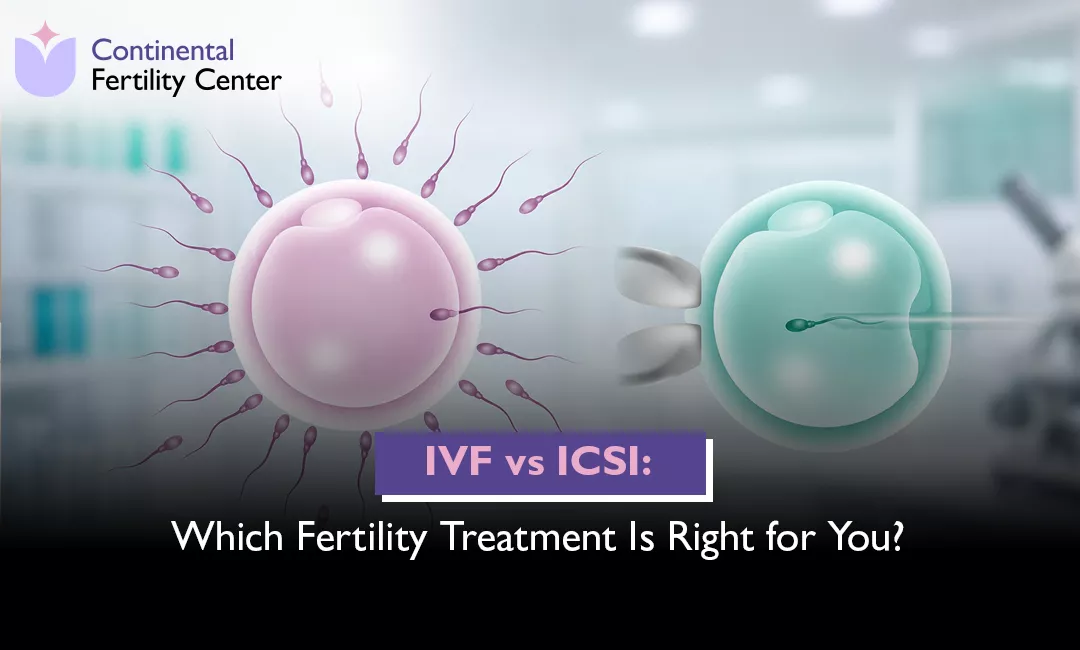
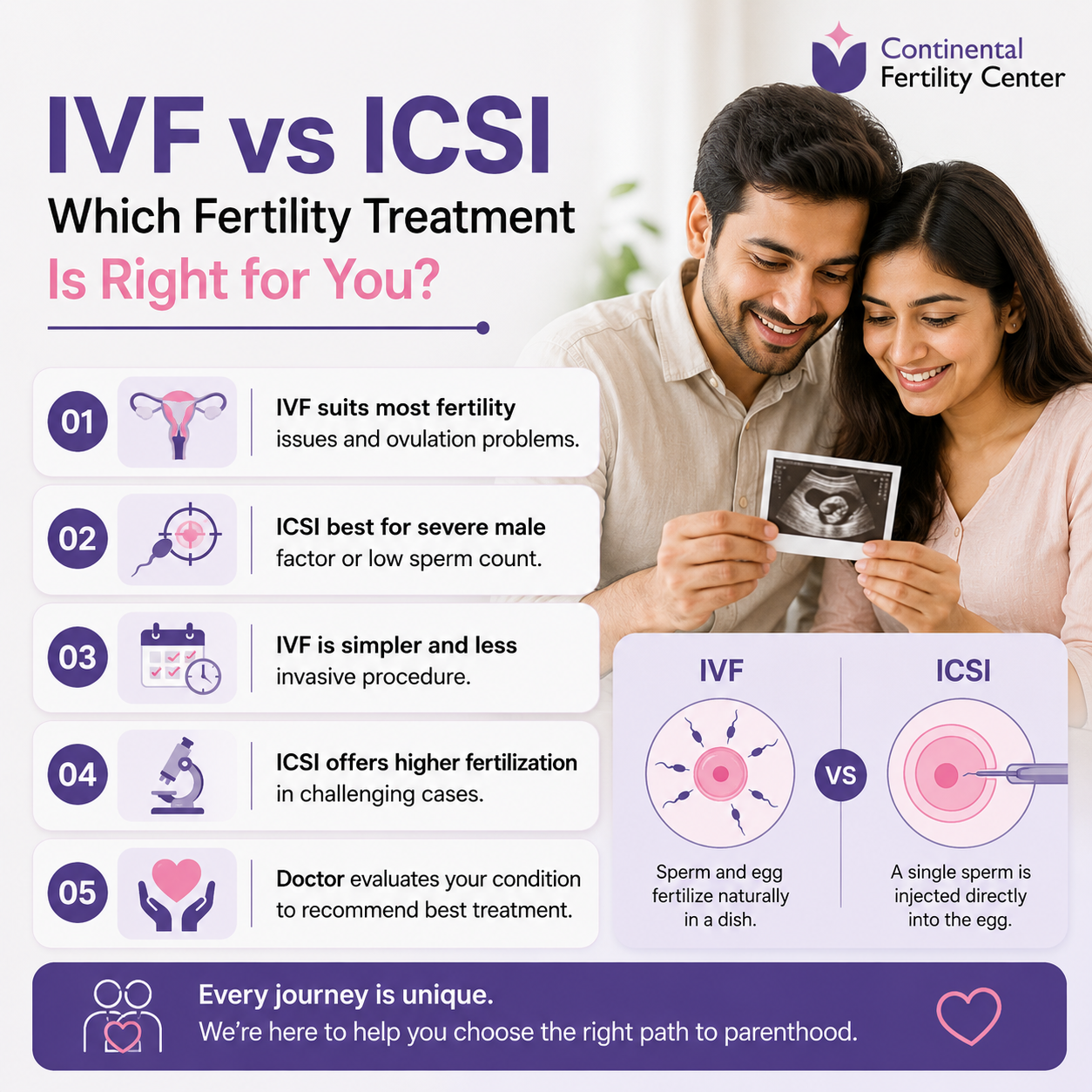
The biggest difference between IVF and ICSI lies in how fertilization takes place.
In IVF, thousands of sperm are placed around the egg, allowing one sperm to fertilize it naturally.
In ICSI treatment, a fertility expert selects one healthy sperm and injects it directly into the egg. This method bypasses many sperm related challenges and improves the chances of successful fertilization in selected patients.
Although both treatments follow similar steps before and after fertilization, the laboratory process is different.
Who Can Benefit from IVF?
IVF may be the right option if you have the following:
- Blocked or damaged fallopian tubes
- Ovulation disorders
- Endometriosis
- Unexplained infertility
- Reduced ovarian reserve
- Failed fertility treatments in the past
Your fertility specialist will perform detailed investigations before recommending IVF.
Who May Need ICSI Treatment?
ICSI treatment is usually recommended for couples facing male infertility. It may be advised when there are the following:
- Low sperm count
- Poor sperm movement
- Abnormal sperm shape
- Previous IVF fertilization failure
- Surgically retrieved sperm
- Frozen sperm samples with limited quantity
The ICSI procedure helps improve fertilization rates when sperm quality is significantly affected.
What Happens During the ICSI Procedure?
The ICSI procedure involves several carefully monitored steps.
- Ovarian stimulation to produce multiple eggs
- Egg retrieval using a minimally invasive procedure
- Selection of the healthiest sperm
- Injection of one sperm into each mature egg
- Monitoring embryo development
- Embryo transfer into the uterus
- Pregnancy test after the recommended waiting period
Every step is performed by experienced fertility specialists and embryologists using advanced laboratory technology.
IVF vs ICSI: Which Treatment Has Better Success?
Many couples searching for IVF vs ICSI want to know which treatment offers higher success rates. The answer depends on the underlying fertility condition.
- IVF works well when sperm quality is normal and fertilization is expected to occur naturally in the laboratory.
- ICSI is often more suitable when severe male infertility is present because it helps overcome fertilization barriers.
- Neither treatment is universally better. The most effective option is the one chosen after a complete fertility evaluation by a qualified fertility specialist.
Advantages of IVF
IVF offers several benefits.
- Well-established fertility treatment
- Suitable for many female fertility conditions
- Natural fertilization process in the laboratory
- Helps couples with unexplained infertility
- Can be combined with advanced embryo selection techniques
Advantages of ICSI Treatment
The benefits of ICSI treatment include:
- Improves fertilization in severe male infertility
- Requires only one healthy sperm for each egg
- Helpful after previous IVF fertilization failure
- Suitable for surgically retrieved sperm
- Widely used with excellent laboratory precision
IVF vs ICSI: Questions to Ask Your Fertility Specialist
Before starting treatment, discuss these important questions.
- What is causing our infertility?
- Is IVF suitable for our condition?
- Do we need ICSI treatment?
- What investigations are required?
- How will the treatment plan be personalized?
- What lifestyle changes can improve fertility?
Clear communication helps couples make informed decisions with confidence.
Why Choose Continental Fertility Center?
Choosing the right fertility center is just as important as selecting the right treatment. Continental Fertility Center offers comprehensive fertility care with a patient-first approach.
Patients benefit from:
- Experienced fertility specialists and embryologists
- Advanced IVF and ICSI laboratory technology
- Personalized fertility treatment plans
- Comprehensive fertility evaluation for both partners
- Ethical and evidence-based medical care
- Modern infrastructure within Continental Hospitals
- International quality standards supported by JCI and NABH accreditation
- Compassionate guidance throughout every stage of the fertility journey
The team focuses on delivering safe, precise, and individualized fertility care while supporting patients emotionally and medically.
Conclusion
Choosing between IVF vs ICSI can feel overwhelming, but the decision should always be based on your unique fertility diagnosis. IVF and ICSI treatment are both highly advanced reproductive techniques that have helped countless couples achieve their dream of parenthood. Understanding what is ICSI, how the ICSI procedure works, and when each treatment is recommended allows you to make informed decisions with confidence.
If you have been struggling with infertility or are unsure which fertility treatment is right for you, consult our best fertility specialists in Hyderabad at Continental Fertility Center. With advanced reproductive technology, personalized treatment plans, internationally recognized JCI- and NABH-accredited care, and a compassionate team, Continental Fertility Center is committed to helping you take the next step toward building your family.
Related Blogs:
Frequently Asked Questions
IVF (In Vitro Fertilization) and ICSI (Intracytoplasmic Sperm Injection) are both assisted reproductive techniques that help couples achieve pregnancy. In conventional IVF, thousands of healthy sperm are placed around a mature egg in a laboratory dish, allowing fertilization to occur naturally. In ICSI, a fertility specialist carefully injects a single healthy sperm directly into the egg using specialized equipment. IVF is commonly recommended when sperm quality is normal, while ICSI is often chosen for severe male infertility or previous fertilization failure. Both procedures share similar steps for ovarian stimulation, egg retrieval, embryo culture, and embryo transfer. The main difference lies only in how fertilization takes place. Your fertility specialist will recommend the most suitable treatment after evaluating both partners' fertility health.
IVF is recommended for couples experiencing infertility due to blocked fallopian tubes, ovulation disorders, endometriosis, unexplained infertility, or age-related fertility decline. It is also suitable when fertility medications or intrauterine insemination (IUI) have not been successful. Women with healthy ovarian reserve and couples with normal sperm quality often benefit from conventional IVF. IVF can also be used when donor eggs or donor sperm are required. Before recommending IVF, fertility specialists assess hormone levels, ovarian reserve, uterine health, and semen analysis results. Every couple's fertility journey is unique, so treatment is personalized. A comprehensive fertility evaluation helps determine whether IVF offers the best chance of achieving pregnancy.
ICSI is primarily recommended for couples facing significant male infertility issues. It is commonly advised when sperm count is very low, sperm movement is poor, sperm shape is abnormal, or sperm must be surgically retrieved from the testes. ICSI is also beneficial for couples who experienced poor or failed fertilization during a previous IVF cycle. In some cases, frozen eggs or embryos may also require ICSI to improve fertilization chances. The procedure helps overcome barriers that prevent sperm from naturally entering the egg. However, ICSI is not necessary for every couple. Your fertility specialist will recommend it only when medical evaluation shows it is likely to improve fertilization outcomes.
The success of IVF and ICSI depends more on factors such as the woman's age, egg quality, embryo quality, sperm health, and the underlying cause of infertility than on the procedure itself. ICSI improves fertilization rates in cases of male infertility but does not automatically increase pregnancy or live birth rates for every couple. When sperm quality is normal, conventional IVF often provides outcomes comparable to ICSI. Choosing the appropriate treatment based on medical evaluation offers the best chance of success. Fertility specialists carefully assess each case before recommending IVF or ICSI. Personalized treatment planning plays a significant role in achieving healthy pregnancies.
Both IVF and ICSI involve similar treatment steps, including ovarian stimulation, egg retrieval, fertilization, embryo culture, and embryo transfer. Most women tolerate the process well with minimal discomfort. Egg retrieval is usually performed under mild anesthesia or sedation, so patients generally do not experience pain during the procedure. Some women may notice mild cramping, bloating, or spotting afterward, which usually resolves within a few days. Embryo transfer is generally quick, gentle, and does not require anesthesia. Fertility specialists closely monitor patients throughout treatment to ensure safety and comfort. Following post-procedure instructions supports a smooth recovery and improves the overall treatment experience.
The choice between IVF and ICSI is based on a thorough fertility evaluation of both partners. Doctors review semen analysis, ovarian reserve tests, hormone levels, ultrasound findings, age, previous fertility treatments, and the duration of infertility. If sperm quality is normal, conventional IVF is often recommended. If severe male infertility or previous fertilization failure is identified, ICSI may provide better fertilization outcomes. Every fertility case is different, so treatment recommendations are personalized rather than following a one-size-fits-all approach. The goal is to maximize the chances of successful fertilization, healthy embryo development, and pregnancy while avoiding unnecessary procedures.
Yes. Millions of healthy babies have been born worldwide through both IVF and ICSI. Extensive research shows that most children conceived through assisted reproductive technologies grow and develop normally. The health of the baby depends on many factors, including parental health, genetics, maternal age, pregnancy care, and lifestyle during pregnancy. Fertility clinics follow strict laboratory protocols and quality standards to ensure safe embryo development. Regular prenatal care after conception remains essential for a healthy pregnancy. Your fertility specialist will also recommend appropriate screening tests throughout pregnancy to monitor both mother and baby's well-being.
Continental Fertility Centre provides comprehensive fertility care supported by experienced fertility specialists, advanced embryology laboratories, and personalized treatment plans. Every couple receives detailed fertility evaluation before selecting the most appropriate treatment option, whether IVF or ICSI. The center follows internationally accepted protocols and uses advanced reproductive technologies to optimize treatment outcomes. Patients receive compassionate counseling, transparent guidance, and continuous support throughout their fertility journey. The multidisciplinary team focuses on clinical excellence while addressing the emotional aspects of infertility. With modern infrastructure, patient-centered care, and individualized treatment strategies, Continental Fertility Centre is committed to helping couples achieve their dream of parenthood.