
Low Ovarian Reserve: Can You Still Conceive Naturally?
The dream of becoming a parent is a deeply personal journey, but when a doctor mentions a low ovarian reserve, it can bring a wave of worry and unanswered questions. Many women immediately wonder if this diagnosis means natural conception is entirely out of reach. Understanding how your egg count impacts your fertility is the first step toward clarity and hope.
Every woman is born with a finite number of eggs, which naturally decreases in both quantity and quality as the years pass. While a decline is a standard part of reproductive aging, a low ovarian reserve means that the number of remaining eggs is lower than what is typically expected for a woman's specific age group.
Hearing this news can be overwhelming, but it is important to know that a low ovarian reserve does not automatically mean infertility. It simply alters the timeline and the strategy needed to achieve a successful pregnancy. By learning how your body functions and exploring your options early, you can take control of your reproductive future with confidence.
What Is a Low Ovarian Reserve?
To understand a low ovarian reserve, it helps to understand how female fertility works. Women are born with approximately one to two million eggs inside their ovaries. By the time puberty arrives, that number drops to around 300,000. During each menstrual cycle, a group of immature eggs begins to develop, but typically only one matures fully and is released during ovulation.
A low ovarian reserve, also known as diminished ovarian reserve, occurs when the pool of remaining eggs drops significantly. While this condition is most common in women in their late 30s and early 40s, it can happen to younger women as well due to genetics, medical conditions, or lifestyle factors.
Can You Still Conceive Naturally With a Low Ovarian Reserve?
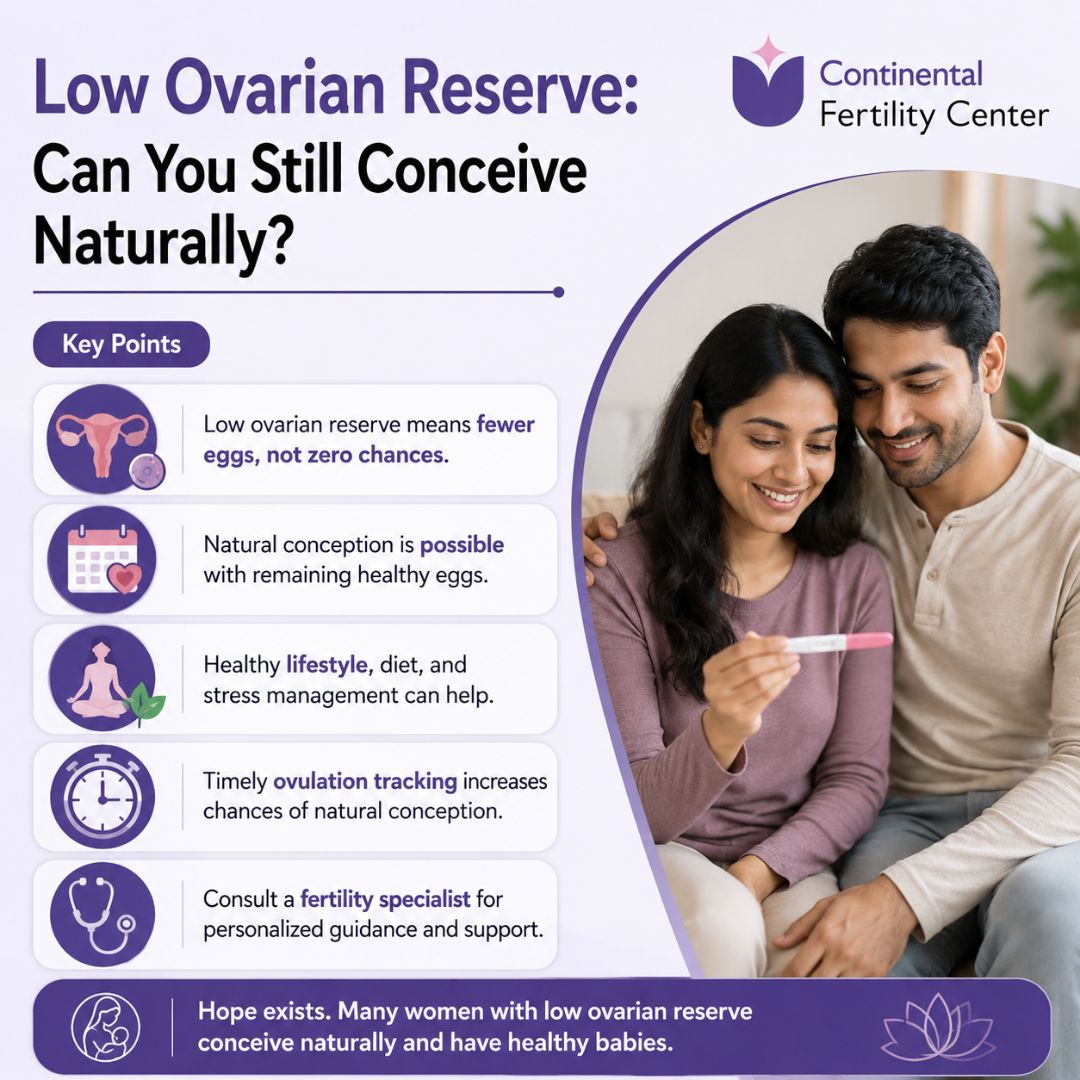
Yes, natural conception is absolutely still possible. A low ovarian reserve refers strictly to the quantity of your remaining eggs, not necessarily their quality.
To achieve a natural pregnancy, your body only needs one healthy, high-quality egg to be released during ovulation and fertilized by a healthy sperm. If you are younger and have a low ovarian reserve, the eggs you do have are still likely to be genetically normal and healthy. However, because there are fewer eggs remaining, the overall window of time you have to conceive naturally is shorter, making early intervention and expert planning highly important.
What Causes a Diminshed Egg Count?
While natural aging is the most frequent reason for a drop in egg count, several other elements can influence your ovarian reserve and pregnancy timelines.
The primary causes include:
- Natural Reproductive Aging: Egg quantity naturally accelerates downward after the age of 35.
- Genetic Factors: Certain chromosomal abnormalities or a family history of early menopause can cause an early drop in egg count.
- Medical Treatments: Past cancer treatments, such as radiation or chemotherapy, can damage the delicate tissue of the ovaries.
- Ovarian Surgeries: Surgical procedures to treat conditions like ovarian cysts or severe endometriosis can inadvertently remove or damage healthy ovarian tissue.
- Environmental and Lifestyle Influences: Chronic smoking and exposure to toxic chemicals can accelerate egg loss.
What Are the Low Ovarian Reserve Symptoms to Watch For?
For the vast majority of women, there are no obvious low ovarian reserve symptoms in day-to-day life. Most women continue to look and feel completely healthy, and they only discover the issue when they experience difficulty getting pregnant.
However, a few subtle signs might indicate a change in your fertility status:
- Shortened menstrual cycles, such as a cycle that lasts 21 days instead of the usual 28 days.
- Heavier or lighter menstrual bleeding than what is normal for you.
- An absolute absence of periods, which can happen if the reserve is severely depleted.
How Do Doctors Check Your Ovarian Reserve?
If you are concerned about your low ovarian reserve fertility status, reproductive specialists use specific diagnostic tools to get a clear picture of your reproductive health.
The primary evaluation methods include:
- Anti-Mullerian Hormone (AMH) Test: This simple blood test measures the levels of AMH, a hormone produced by the small, developing follicles in your ovaries. A lower AMH level generally points to a lower remaining egg count.
- Follicle Stimulating Hormone (FSH) Test: Performed on the second or third day of your menstrual cycle, this blood test checks how hard your brain is working to stimulate your ovaries. High FSH levels can indicate that the ovaries require more stimulation because the egg supply is low.
- Antral Follicle Count (AFC): During this pelvic ultrasound, a specialist directly counts the visible active follicles in both ovaries to estimate your total remaining reserve.
What Are the Best Treatment Options and Solutions?
If you are diagnosed with a low ovarian reserve, a dedicated fertility specialist will build a personalized treatment map to maximize your chances of a successful pregnancy.
The most effective medical solutions include:
- Fertility Preservation (Egg Freezing): If you are not ready to get pregnant immediately but have a low reserve, freezing your young, healthy eggs now protects your future family planning options.
- In Vitro Fertilization (IVF): This highly effective treatment uses specialized medications to stimulate your ovaries to grow as many healthy eggs as possible in a single cycle, which are then fertilized in a secure laboratory setting.
- Supplements and Lifestyle Adjustments: While you cannot create new eggs, specific supplements like Coenzyme Q10 and an antioxidant-rich diet can improve the quality and energy production of your remaining eggs.
Why Choose Continental Fertility Center for Your Fertility Journey?
When dealing with a sensitive diagnosis like a low ovarian reserve, choosing the right medical partner is vital. Continental Hospitals is widely recognized as the best hospital in Hyderabad for comprehensive female reproductive care and advanced fertility solutions.
The Continental Fertility Center provides a world-class healthcare environment backed by prestigious national and international accreditations. The hospital proudly holds the National Accreditation Board for Hospitals & Healthcare Providers (NABH) accreditation. This distinction ensures that your care aligns with the highest international standards of patient safety, clinical quality, and ethical medical practices.
Equipped with highly advanced embryology laboratories and cutting-edge diagnostic testing tools, the medical team at Continental Hospitals designs customized treatment strategies tailored to your unique biological clock. The focus is always on delivering compassionate, transparent, and precise medical care to give you the highest possible chance of bringing a healthy baby home.
Conclusion
A diagnosis of a low ovarian reserve can feel frightening, but it is not a definitive barrier to your dreams of motherhood. Many women with a lower egg count go on to have healthy, beautiful pregnancies, either naturally or with the support of modern reproductive assistance. The key to success lies in understanding your body early and taking proactive, well-informed steps.
If you suffer from irregular cycles, unexplained infertility, or suspect you may have a low ovarian reserve, do not wait to seek professional clarity. Time is a valuable factor in managing your fertility, and early expert guidance can make all the difference.
Book a personalized consultation with our best fertility clinic in Hyderabad at Continental Hospitals today to secure your path to parenthood.
Related Blog Topics:
Frequently Asked Questions
Low ovarian reserve refers to a reduced number of eggs remaining in a woman's ovaries compared to what is expected for her age. It does not necessarily mean that pregnancy is impossible, but it can reduce the chances of conception. Women with low ovarian reserve may have fewer eggs available for ovulation and fertility treatments. The condition is often identified through fertility tests such as Anti-Müllerian Hormone (AMH), Follicle-Stimulating Hormone (FSH), and antral follicle count (AFC). Age, genetics, medical conditions, surgeries, and certain treatments like chemotherapy can contribute to reduced ovarian reserve. Some women may not experience any symptoms and only discover the condition while trying to conceive. Early diagnosis allows timely fertility planning and treatment. Consulting a fertility specialist can help determine the best options for achieving pregnancy.
Yes, many women with low ovarian reserve can still conceive naturally. Ovarian reserve indicates the quantity of eggs rather than their ability to be fertilized. If ovulation is occurring regularly and the egg quality remains good, natural conception is possible. The likelihood of pregnancy depends on factors such as age, overall reproductive health, sperm quality, and the presence of any underlying fertility issues. Women under 35 with low ovarian reserve may still have a reasonable chance of natural conception. However, fertility may decline more rapidly over time, making early evaluation important. Tracking ovulation, maintaining a healthy lifestyle, and seeking timely medical guidance can improve pregnancy planning. A fertility specialist can help assess individual chances and recommend appropriate next steps.
Low ovarian reserve often develops without noticeable symptoms, making it difficult to detect without testing. Some women may experience shorter menstrual cycles, irregular periods, or changes in menstrual flow. Difficulty conceiving after months of trying may be one of the first indications. In some cases, symptoms associated with declining ovarian function, such as hot flashes or night sweats, may occur. However, many women with low ovarian reserve continue to have regular menstrual cycles. Because symptoms are not always present, fertility testing is the most reliable way to evaluate ovarian reserve. Blood tests such as AMH and FSH, along with ultrasound assessments, provide valuable information. Women concerned about fertility should consult a specialist for a comprehensive evaluation and personalized guidance.
Low ovarian reserve is diagnosed through a combination of blood tests, ultrasound examinations, and clinical assessment. One of the most commonly used tests is the Anti-Müllerian Hormone (AMH) test, which estimates the remaining egg supply. Follicle-Stimulating Hormone (FSH) and estradiol levels may also be measured, usually during the early days of the menstrual cycle. A transvaginal ultrasound can assess the antral follicle count (AFC), which reflects the number of small follicles in the ovaries. These results are interpreted along with the woman's age, medical history, and reproductive goals. No single test can predict fertility with complete accuracy. A fertility specialist can explain the results and discuss potential treatment options based on individual circumstances.
Not necessarily. Low ovarian reserve primarily refers to a reduced number of eggs and does not automatically indicate poor egg quality. Egg quality is more closely related to age than ovarian reserve alone. Younger women with low ovarian reserve may still have healthy eggs capable of resulting in successful pregnancies. However, as age increases, both egg quantity and quality tend to decline. Fertility specialists evaluate multiple factors when assessing reproductive potential. While low ovarian reserve can reduce the number of eggs available during natural cycles or fertility treatments, pregnancy can still occur if healthy eggs are present. Understanding both egg quantity and quality is important when planning fertility treatments and estimating pregnancy chances.
Although ovarian reserve itself cannot usually be increased, healthy lifestyle choices may support overall fertility and reproductive health. Maintaining a healthy weight, eating a balanced diet rich in fruits, vegetables, proteins, and antioxidants, and engaging in regular physical activity can be beneficial. Avoiding smoking, excessive alcohol consumption, and recreational drugs is strongly recommended. Managing stress through relaxation techniques, meditation, or counseling may also support emotional well-being during fertility planning. Adequate sleep and regular medical checkups are important. Some women may discuss fertility supplements with their doctor, although evidence varies. Because fertility declines over time in women with low ovarian reserve, seeking timely medical advice remains one of the most important steps.
Women diagnosed with low ovarian reserve should consider consulting a fertility specialist as early as possible, especially if they are planning pregnancy. If you are under 35 and have been trying to conceive for six months without success, a fertility evaluation is recommended. Women over 35 should seek assessment even sooner. Early consultation helps identify additional fertility factors and allows more treatment options while ovarian function remains relatively stronger. A specialist can evaluate hormone levels, ovarian reserve, ovulation patterns, and overall reproductive health. Personalized recommendations may include natural conception strategies, fertility preservation, ovulation induction, intrauterine insemination (IUI), or IVF. Early intervention can improve reproductive planning and provide greater flexibility in fertility decisions.
Several fertility treatment options are available for women with low ovarian reserve, depending on age, test results, and individual fertility goals. Treatment may include ovulation monitoring, fertility medications, intrauterine insemination (IUI), or in vitro fertilization (IVF). IVF is often considered because it allows specialists to retrieve and fertilize available eggs in a controlled setting. Some women may benefit from fertility preservation techniques such as egg freezing if pregnancy is not immediately planned. In cases of significantly diminished ovarian reserve, donor eggs may also be discussed as an option. The most appropriate treatment varies from person to person. A fertility specialist can develop a personalized treatment plan based on medical history, ovarian reserve testing, and reproductive goals.