
Secondary Infertility: Why Is It Harder to Conceive Again?
Many couples assume that because they have successfully had a child before, expanding their family a second or third time will be just as easy. However, encountering unexpected challenges when trying to build your family further is a surprisingly common reality. This unique situation is known as secondary infertility, and it leaves many parents feeling confused, isolated, and longing for answers.
What is secondary infertility exactly? It is defined as the inability to conceive or carry a pregnancy to term after previously giving birth to one or more children without medical assistance. The condition brings a distinct emotional weight, as couples struggle to understand how a reproductive system that functioned perfectly in the past is now facing obstacles.
Navigating this secondary journey requires a clear understanding of the underlying factors that might have changed since your last pregnancy. By exploring the causes, modern diagnostic approaches, and available medical solutions, parents can gain clarity and find a clear path forward. This article breaks down why conceiving again can be difficult and how professional medical care can help you achieve your family goals.
What Is Secondary Infertility and How Common Is It?
When couples experience difficulty expanding their family, they often wonder if their situation is unusual. Is it common to struggle with a second pregnancy after a smooth first experience?
The reality is that secondary infertility accounts for a significant portion of all infertility cases globally. It is just as prevalent as primary infertility, where a couple has never conceived. The medical definition applies when a couple has been actively trying to conceive for one year, or for six months if the woman is over the age of 35, after having a previous child.
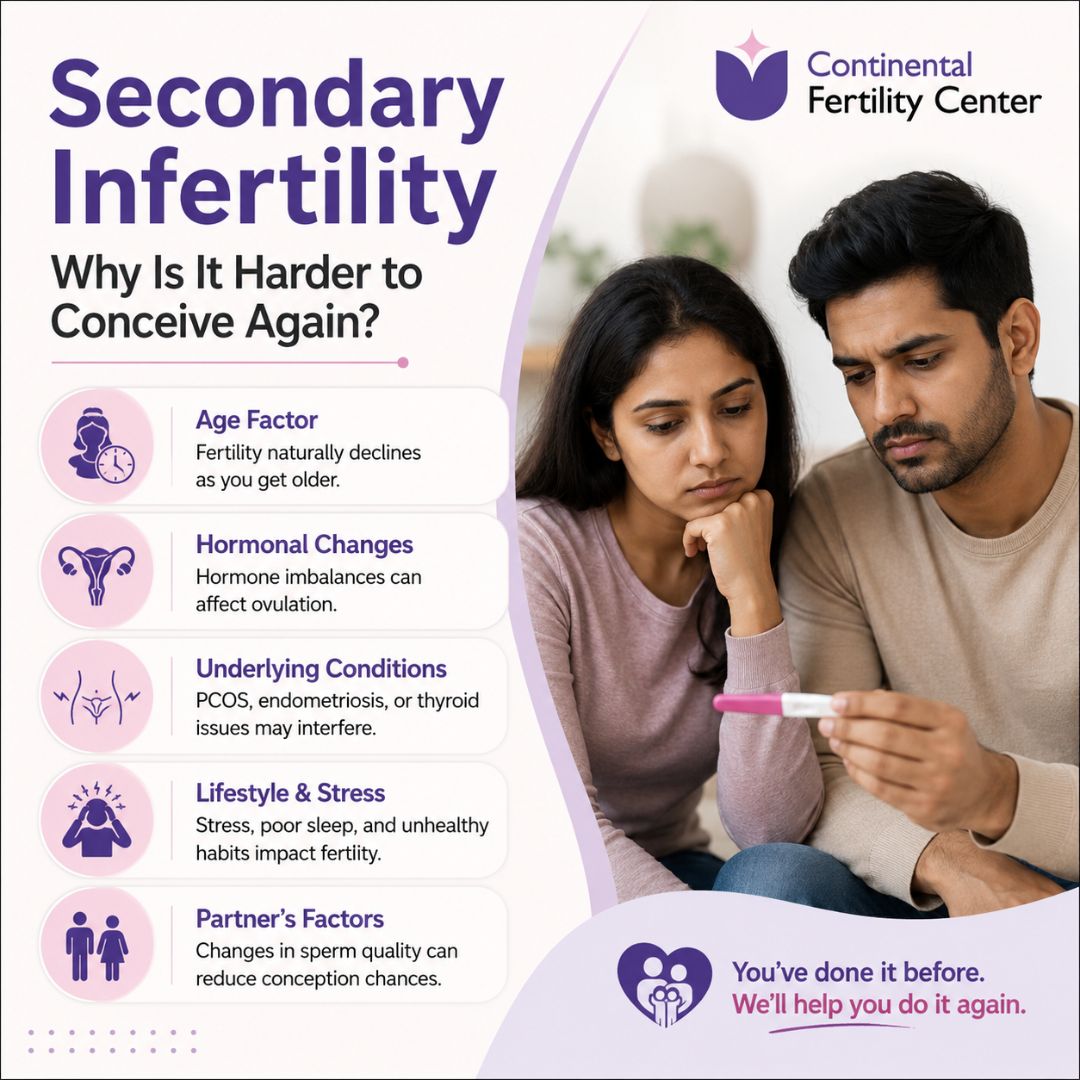
What Are the Primary Secondary Infertility Causes?
Why does a reproductive system that previously worked successfully suddenly encounter difficulties? Several biological and lifestyle factors can evolve over the years between pregnancies, creating new obstacles to conception.
The most frequent secondary infertility causes involve changes in age, reproductive health, and lifestyle, which include:
- Advanced Maternal Age: Egg quality and egg quantity decline naturally as women age. If a few years have passed since your last child, your ovarian reserve may have decreased, making fertilization more challenging.
- Declining Sperm Quality: Male fertility can also change over time. Changes in health, medication use, or lifestyle can reduce sperm count, motility, and overall sperm quality.
- Structural Damage or Blockages: Previous deliveries, especially those involving cesarean sections, can sometimes leave uterine scarring or pelvic adhesions. Complications or infections after a prior birth can also cause blockages in the fallopian tubes.
- Hormonal Changes and Ovulation Disorders: Conditions like Polycystic Ovary Syndrome or thyroid imbalances can develop or worsen over time, disrupting regular ovulation cycles.
- Weight Fluctuations and Lifestyle Factors: Significant weight gain or weight loss, increased stress levels, changes in diet, or new medications since your last pregnancy can alter hormone production in both partners.
How Do Doctors Diagnose Secondary Infertility?
When should a couple seek help if they are struggling to expand their family? If you have been trying to conceive for over a year, or six months if you are over 35, it is advisable to consult a fertility specialist for a comprehensive evaluation.
The diagnostic process involves examining both partners to identify any new or developing reproductive issues through targeted tests:
Ovarian Reserve Testing: Blood tests to measure hormone levels, such as anti-Mullerian hormone, help specialists evaluate the remaining egg supply.
- Hysterosalpingogram: This specialized X-ray checks for blockages in the fallopian tubes and evaluates the shape of the uterine cavity to ensure it can support a pregnancy.
- Semen Analysis: A simple lab test assesses sperm count, movement, and shape to rule out or confirm male factor fertility changes.
- Ultrasound Imaging: Pelvic ultrasounds look for structural issues such as uterine fibroids, polyps, or scarring from previous surgeries.
What Secondary Infertility Treatment Options Are Available?
Can this condition be treated effectively if you already have a child? Yes, modern reproductive science provides a wide array of options tailored to the specific root cause discovered during your diagnostic workup.
Depending on the test results, your medical provider may recommend one or more of the following paths:
- Ovulation Induction Medications: Fertility drugs can help regulate or stimulate ovulation if hormonal imbalances are preventing the regular release of healthy eggs.
- Surgical Corrections: Minor minimally invasive surgeries, such as hysteroscopy or laparoscopy, can remove uterine scarring, fibroids, or polyps caused by previous births.
- Intrauterine Insemination: This fertility treatment involves placing concentrated, washed sperm directly into the uterus during ovulation to increase the chances of fertilization.
- In vitro fertilization: For advanced cases or age-related fertility declines, eggs and sperm are combined in a specialized laboratory, and the healthy embryo is transferred back into the womb.
Why Choose Continental Fertility Center for Your Fertility Journey?
Where should you go to receive the best care when trying to conceive your next child? Choosing a trusted medical institution with specialized expertise is essential for a smooth and successful experience.
Continental Hospitals is widely recognized as the best hospital in Hyderabad for comprehensive reproductive medicine and family planning services. The Continental Fertility Center provides a holistic environment where couples receive highly individualized attention, ensuring their previous medical history is thoroughly integrated into their current treatment plan.
The institution holds prestigious national and international accreditations, including the National Accreditation Board for Hospitals & Healthcare Providers accreditation. This NABH accreditation ensures that the hospital adheres to the highest global safety standards, operational ethics, and clinical quality benchmarks. Equipped with advanced diagnostic tools, sophisticated embryology labs, and a team of compassionate medical experts, the hospital delivers excellent success rates while maintaining strict patient privacy.
Conclusion
Experiencing difficulty when trying to conceive again can be an emotionally taxing experience, but you do not have to navigate this path alone. Understanding that your body changes over time and that secondary infertility is a treatable medical condition can help remove the unwarranted guilt or confusion often associated with it. With early intervention, precise testing, and advanced fertility care, the dream of growing your family is entirely achievable.
If you suffer from secondary infertility or have questions about your reproductive health, taking a proactive step toward professional guidance can make all the difference in your journey.
Book a consultation with our best fertility specialist in Hyderabad at Continental Hospitals today to explore your personalized path toward welcoming your next child.
Related Blog Topics:
Frequently Asked Questions
Secondary infertility is the inability to conceive or carry a pregnancy to term after previously giving birth to one or more children without fertility treatment. Many couples assume that having conceived before guarantees future pregnancies, but fertility can change over time. Age-related decline in egg quality, changes in sperm health, hormonal disorders, and medical conditions can affect fertility after the first pregnancy. Secondary infertility can be emotionally challenging because couples often do not expect difficulties conceiving again. Both men and women can contribute to fertility issues. A thorough fertility evaluation is important to identify the underlying cause. Early diagnosis can improve treatment outcomes and increase the chances of a successful pregnancy. Treatment options depend on the specific cause and may range from lifestyle changes to assisted reproductive technologies.
Secondary infertility can result from several factors affecting either partner. In women, advancing age, ovulation disorders, endometriosis, blocked fallopian tubes, uterine fibroids, or hormonal imbalances are common causes. Previous pregnancy complications, pelvic infections, or surgeries may also affect fertility. In men, reduced sperm count, poor sperm motility, hormonal problems, or lifestyle factors such as smoking and obesity can contribute. Weight gain, chronic stress, poor nutrition, and certain medical conditions can further impact fertility. Sometimes multiple factors are involved. In some cases, no specific cause is identified despite extensive testing. A comprehensive fertility assessment helps determine the underlying issue and guides appropriate treatment.
Yes, age is one of the most significant factors affecting fertility. Women's fertility naturally declines with age, especially after 35 years, due to a decrease in both egg quantity and quality. This decline can make conception more difficult and increase the risk of miscarriage. Men also experience age-related changes that may affect sperm quality and reproductive outcomes. Couples who conceived easily in their twenties or early thirties may face challenges several years later when trying for another child. Age-related fertility decline can occur even when overall health appears good. Early evaluation is recommended if conception does not occur within six months for women over 35 or within one year for younger women.
Lifestyle factors can significantly influence fertility in both men and women. Weight gain or obesity may disrupt hormone levels and ovulation, while being underweight can also affect reproductive function. Smoking, excessive alcohol consumption, poor diet, lack of exercise, and chronic stress can negatively impact fertility. Sleep disturbances and exposure to environmental toxins may further affect reproductive health. Men may experience reduced sperm quality due to unhealthy lifestyle habits. Making positive changes such as maintaining a healthy weight, eating a balanced diet, exercising regularly, and avoiding tobacco can improve fertility outcomes. These modifications may enhance natural conception and support fertility treatments when needed.
Diagnosis of secondary infertility begins with a detailed medical history and physical examination of both partners. Doctors evaluate menstrual cycles, previous pregnancies, lifestyle factors, and any medical conditions that may affect fertility. Blood tests are performed to assess hormone levels and ovulation. Imaging studies such as pelvic ultrasound help evaluate the uterus and ovaries. Fallopian tube patency may be assessed through specialized procedures. Men typically undergo semen analysis to evaluate sperm count, motility, and morphology. Additional tests may be recommended based on individual findings. A comprehensive evaluation helps identify the cause of infertility and allows fertility specialists to develop an effective and personalized treatment plan.
Stress alone is rarely the sole cause of secondary infertility, but it can contribute to fertility challenges. Chronic stress may affect hormone regulation, menstrual cycles, ovulation, sexual desire, and overall reproductive health. The emotional burden of trying to conceive again can create additional anxiety and frustration for couples. Stress may also lead to unhealthy habits such as poor sleep, overeating, smoking, or reduced physical activity, which can negatively affect fertility. Managing stress through relaxation techniques, counseling, mindfulness practices, regular exercise, and emotional support can improve overall well-being. While stress reduction may not directly resolve infertility, it can support reproductive health and enhance treatment experiences.
Treatment for secondary infertility depends on the underlying cause identified during evaluation. Lifestyle modifications may be recommended when weight, nutrition, or habits contribute to fertility issues. Medications can help stimulate ovulation in women with ovulatory disorders. Surgical procedures may be used to treat conditions such as endometriosis, uterine fibroids, or blocked fallopian tubes. Male fertility issues may require medication, lifestyle changes, or specialized treatments. Assisted reproductive technologies such as intrauterine insemination (IUI) and in vitro fertilization (IVF) may be recommended when natural conception is difficult. Fertility specialists develop individualized treatment plans based on age, medical history, fertility test results, and reproductive goals.
Couples should seek medical evaluation if they have been trying to conceive for one year without success when the woman is under 35 years old. Women aged 35 years or older should consult a fertility specialist after six months of unsuccessful attempts. Earlier evaluation is recommended if there is a history of irregular periods, endometriosis, pelvic infections, miscarriages, reproductive surgeries, or known male fertility problems. Prompt assessment can identify potential issues before they become more difficult to treat. Early diagnosis often expands treatment options and improves the likelihood of a successful pregnancy. Fertility specialists can provide guidance, testing, and personalized treatment recommendations based on each couple's circumstances.