
Why Am I Not Getting Pregnant Despite Regular Cycles?
Understanding your body is the first major step when you are trying to conceive. For many individuals and couples, a predictable, monthly menstrual cycle feels like a reassuring sign that everything is functioning perfectly. It is a common belief that if your period arrives like clockwork, your fertility must be completely on track, making the journey to pregnancy straightforward.
However, month after month of negative tests can bring unexpected heartbreak and confusion. It is incredibly frustrating to feel like you are doing everything right-tracking your calendar, timing intimacy, and maintaining your health-only to face continued disappointment. You might find yourself constantly wondering why you are not getting pregnant when your body seems to be following the rules.
The truth is that a regular cycle is only one piece of the complex puzzle of getting pregnant. While it is a fantastic starting point, human reproduction relies on a delicate sequence of biological events that go far beyond a monthly period. If you have been struggling to conceive despite predictable cycles, you are far from alone, and there are very specific, treatable reasons why this might be happening.
What Are the Hidden Symptoms of Infertility to Watch For?
When your menstrual cycle is regular, obvious symptoms of reproductive hurdles are often absent. However, subtle signs can sometimes indicate underlying challenges with fertility:
- Unusually heavy or painful periods: While regular, intense cramping or a very heavy flow can point toward conditions like endometriosis or uterine fibroids.
- Significant pelvic pain: Chronic discomfort during intercourse or pelvic pain outside of your period can signal hidden inflammation or structural issues.
- Hormonal shifts: Unexpected adult acne, changes in skin texture, or sudden hair thinning can suggest subtle hormonal imbalances that interfere with early pregnancy.
What Causes Difficulty Getting Pregnant When Your Cycles Are Regular?
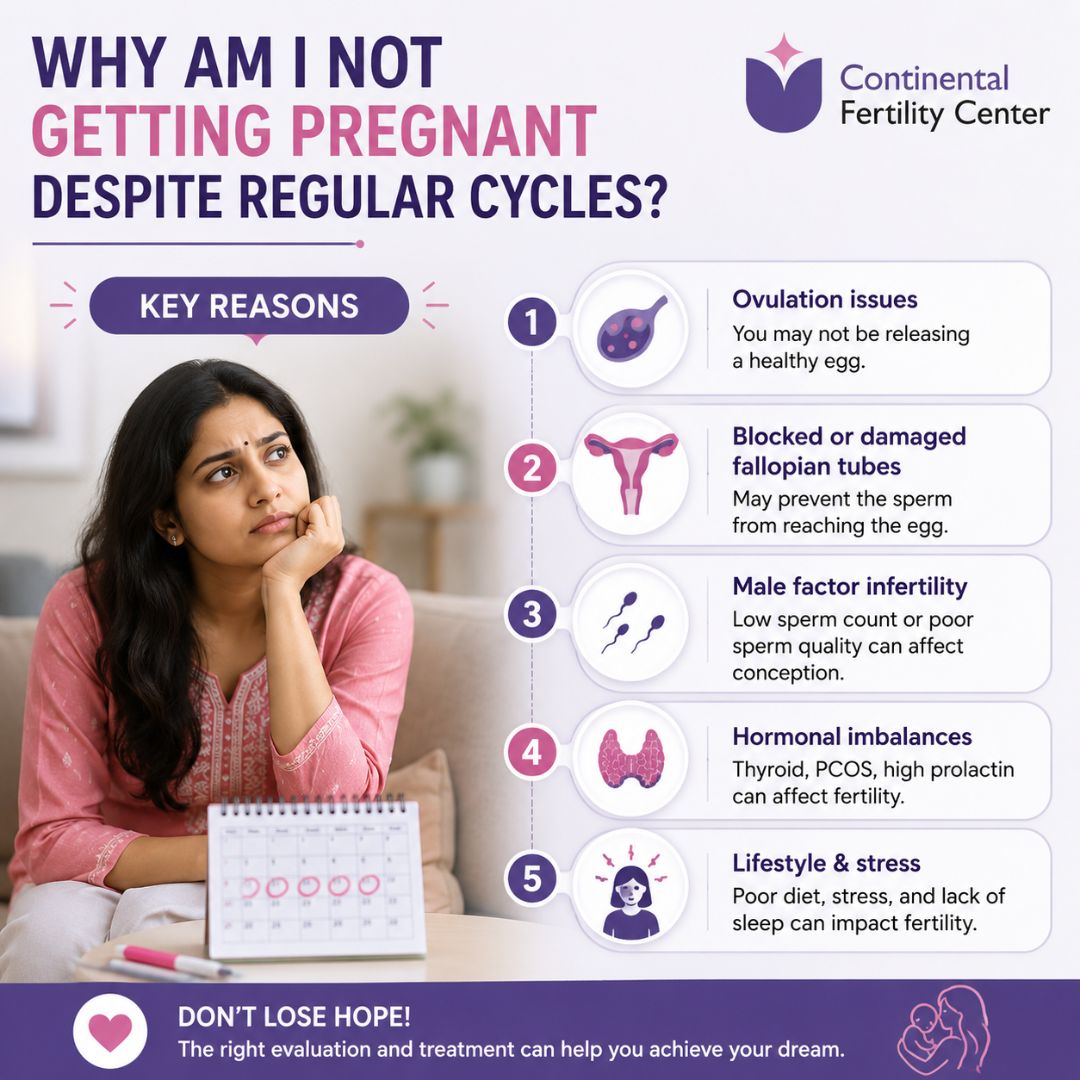
A predictable period usually means you are ovulating, but it does not guarantee that every other reproductive factor is working smoothly. Several underlying causes can delay pregnancy:
- Anovulatory Cycles: Surprisingly, it is possible to have regular bleeding without actually releasing an egg. This is known as an anovulatory cycle, where the uterine lining sheds due to hormonal fluctuations, but true ovulation never occurred.
- Fallopian Tube Blockages: Even if a healthy egg is released, it must travel through the fallopian tubes to meet the sperm. If these tubes are blocked or damaged due to past infections or pelvic conditions, conception cannot happen.
- Male Factor Infertility: Fertility is a shared journey. In nearly half of all couples facing difficulties, the primary cause is related to sperm health, including low sperm count, poor motility (movement), or irregular sperm shape. A male partner can be perfectly healthy vibrant, yet still have hidden sperm issues.
- Uterine Structural Issues: Small polyps, fibroids, or an irregularly shaped uterus can prevent a fertilized egg from properly implanting in the uterine wall.
What Are the Main Risk Factors That Affect Your Fertility?
Several lifestyle and biological factors can impact how to get pregnant, even if your menstrual calendar looks ideal:
- Maternal Age: Egg quality and quantity naturally decline as women reach their mid-30s and beyond, making implantation more difficult.
- Chronic Stress: High stress levels alter the body's delicate biochemical balance, which can subtly disrupt the chemical signals required for successful conception.
- Weight Imbalances: Being significantly under or overweight can alter estrogen production, affecting egg quality and uterine receptivity.
How Do Doctors Reach a Diagnosis?
If pregnancy hasn't happened after a year of regular tracking (or six months if you are over 35), specialists use a series of highly targeted diagnostic steps to find the root cause:
- Hormonal Blood Tests: These evaluate specific hormone levels to confirm that healthy egg development and true ovulation are happening.
- Hysterosalpingography (HSG): A specialized X-ray used to view the uterine cavity and confirm that the fallopian tubes are completely open.
- Semen Analysis: A straightforward, non-invasive test for the male partner to assess sperm count, shape, and movement.
What Treatment Options Are Available?
Overcoming fertility challenges is highly achievable, with treatments tailored precisely to what the diagnostic tests reveal:
- Ovulation Induction: If tracking shows subtle ovulation irregularities, mild oral medications can be prescribed to stimulate the release of healthy, mature eggs.
- Surgical Interventions: Minor, minimally invasive procedures like laparoscopy can clear blocked fallopian tubes, remove uterine fibroids, or treat endometriosis.
- Assisted Reproductive Technology (ART): Advanced treatments such as Intrauterine Insemination (IUI) or In Vitro Fertilization (IVF) help bridge the gap by bringing sperm and egg together in optimal environments.
What Lifestyle Tips Can Help Boost Your Fertility Naturally?
While medical guidance is essential, adopting a few supportive lifestyle changes can optimize your body's natural readiness for pregnancy:
- Eat a nutrient-dense diet: Focus on whole grains, lean proteins, healthy fats, and antioxidant-rich fruits and vegetables.
- Stay active moderately: Engage in regular, moderate exercise like walking, swimming, or yoga, avoiding extreme, exhaustive workouts.
- Limit toxins: Eliminate smoking, significantly reduce alcohol intake, and minimize caffeine consumption to protect egg and sperm health.
Why Choose Continental Fertility Center for Infertility Treatment?
When navigating the emotional and physical journey of trying to conceive, choosing the right medical partner makes all the difference. Continental Fertility Center stands out as a beacon of hope and excellence for couples seeking specialized care.
Our center brings together expert specialists who possess deep clinical expertise in managing complex reproductive challenges. We combine this human expertise with advanced technology and state-of-the-art infrastructure to ensure accurate diagnoses and superior clinical outcomes. Recognizing that reproductive health is deeply interconnected, we provide multidisciplinary care that addresses both partners' needs simultaneously, crafting a personalized treatment plan for every unique couple.
As a premier healthcare institution, Continental Hospitals proudly holds both JCI Accreditation and NABH Accreditation, reflecting our unwavering commitment to global benchmarks of medical excellence, safety, and high standards of patient care. Furthermore, our campus is backed by 24/7 emergency and critical care services, ensuring complete safety and peace of mind at every single stage of your treatment journey.
Conclusion
Failing to conceive when your menstrual cycles are perfectly regular can feel incredibly isolating, but it is a clear sign that it is time to look deeper. Fertility relies on an intricate balance of structural, hormonal, and male-factor dynamics that go far beyond the calendar. Identifying the subtle barriers to conception early opens the door to highly effective, personalized medical paths that can turn your dream of parenthood into a reality.
For any queries related to infertility, consult our best fertility specialist in Hyderabad at Continental Fertility Center. Visit Continental Hospitals for expert diagnosis, advanced treatment, and comprehensive care.
Related Blog Topics:
Frequently Asked Questions
Regular menstrual cycles often indicate that ovulation is occurring, but pregnancy depends on many additional factors. Issues such as poor egg quality, blocked fallopian tubes, endometriosis, uterine abnormalities, hormonal imbalances, or male infertility can affect conception even when periods are regular. Timing of intercourse may also play a role. Age-related decline in fertility can reduce the chances of pregnancy despite predictable cycles. Lifestyle factors including stress, obesity, smoking, and excessive alcohol intake may further impact fertility. A comprehensive fertility evaluation for both partners can help identify the underlying cause and guide appropriate treatment options.
Yes, it is possible to ovulate regularly and still experience infertility. Ovulation is only one part of the conception process. The egg must be healthy, the sperm must be capable of fertilization, and the embryo must successfully implant in the uterus. Conditions such as tubal blockage, endometriosis, uterine fibroids, polyps, diminished ovarian reserve, or male factor infertility can prevent pregnancy despite normal ovulation. Additionally, age-related changes in egg quality can affect fertility. If pregnancy has not occurred after several months of trying, fertility testing can help determine the cause and identify suitable treatment options.
A woman may continue to have regular menstrual cycles while experiencing a decline in fertility due to age. As women grow older, both the quantity and quality of eggs naturally decrease. This decline becomes more noticeable after age 35 and accelerates further after age 40. Reduced egg quality can lead to lower fertilization rates, implantation challenges, and an increased risk of miscarriage. Regular periods do not necessarily indicate healthy ovarian reserve. Fertility assessments such as AMH testing and antral follicle counts can provide insights into reproductive potential and help determine the most appropriate fertility treatment strategy.
Yes, male infertility contributes to nearly half of all infertility cases. Even when a woman has regular cycles and appears healthy, problems with sperm count, motility, morphology, or overall sperm function can prevent conception. Lifestyle factors, smoking, obesity, alcohol consumption, infections, hormonal disorders, and certain medical conditions can negatively impact sperm quality. A semen analysis is usually one of the first tests recommended during a fertility evaluation because it is simple, non-invasive, and highly informative. Identifying male factor infertility early can help couples receive timely and effective treatment.
Stress may not completely stop ovulation in all women, but chronic stress can influence reproductive hormones and reduce fertility. High stress levels can affect sexual desire, relationship dynamics, sleep quality, and overall health, all of which play a role in conception. Stress may also contribute to irregular hormone signaling that impacts egg quality and implantation. While stress alone is rarely the sole cause of infertility, managing it through relaxation techniques, exercise, counseling, mindfulness practices, and adequate sleep can support reproductive health. Maintaining emotional well-being is an important part of a comprehensive fertility plan.
A fertility evaluation typically includes tests for both partners. Women may undergo hormone testing, ovarian reserve assessment, pelvic ultrasound, ovulation monitoring, and imaging studies to evaluate the uterus and fallopian tubes. Men are generally advised to have a semen analysis to assess sperm health. Depending on the findings, additional tests may be recommended to identify conditions such as endometriosis, fibroids, polyps, or genetic factors. These investigations help fertility specialists determine the cause of infertility and develop a personalized treatment plan aimed at improving the chances of successful conception.
Couples under the age of 35 are generally advised to seek medical evaluation after one year of regular, unprotected intercourse without achieving pregnancy. Women aged 35 and older should consider consulting a fertility specialist after six months of trying. Immediate evaluation may be recommended if there is a history of irregular periods, endometriosis, pelvic infections, recurrent miscarriages, or known male fertility issues. Early assessment can help identify potential barriers to conception and prevent unnecessary delays in treatment. Timely intervention often improves the likelihood of achieving a healthy pregnancy.
Treatment depends on the underlying cause of infertility. Options may include lifestyle modifications, fertility-enhancing medications, ovulation induction, intrauterine insemination (IUI), or in vitro fertilization (IVF). Surgical procedures may be recommended to correct issues such as fibroids, polyps, endometriosis, or blocked fallopian tubes. Male infertility treatments can improve sperm quality or assist fertilization. In some cases, advanced reproductive technologies such as ICSI may be beneficial. A fertility specialist will evaluate the medical history, test results, age, and reproductive goals of both partners to recommend the most effective and individualized treatment approach.